I've spent six years watching people buy the wrong dumbbells. I've watched a 17-year-old kid lose confidence because his equipment felt cheap, and I've watched a 70-year-old grandmother outlift teenagers because her gear didn't fight her.
The adjustable vs fixed dumbbells debate isn't about which is "better." It's about which failure mode you can live with.
Adjustable saves space but slows workouts. Fixed feels commercial but costs more and takes up your whole closet.
I've owned both, returned both, and kept the ones that survived my 4,000-square-foot facility and my shop dog Wren's noise tolerance.
Here's the honest trade-off, with the winners and the ones I'd skip.
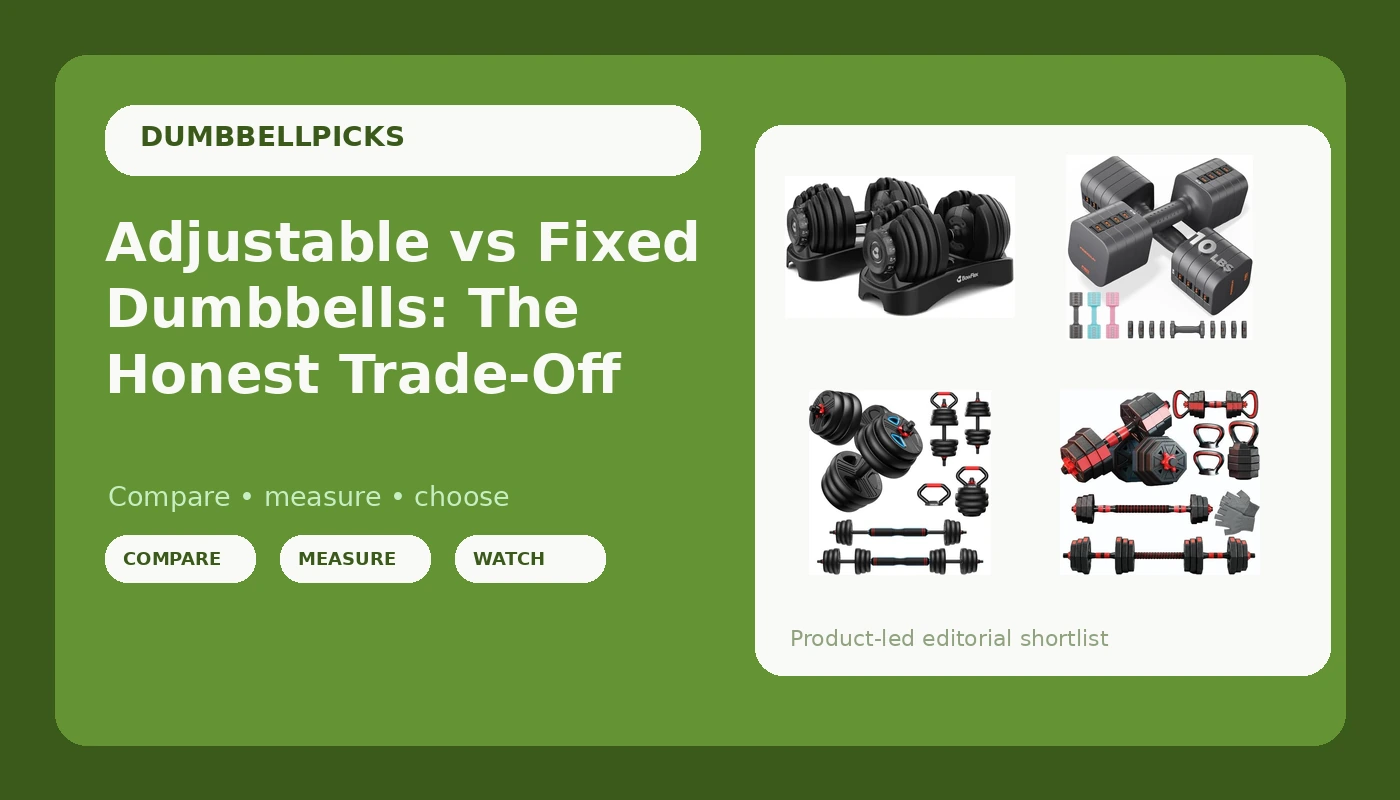
BowFlex Results Series SelectTech Dumbbells
Commercial feel, 15-52 lb range, dial change in seconds
Visit on Amazon →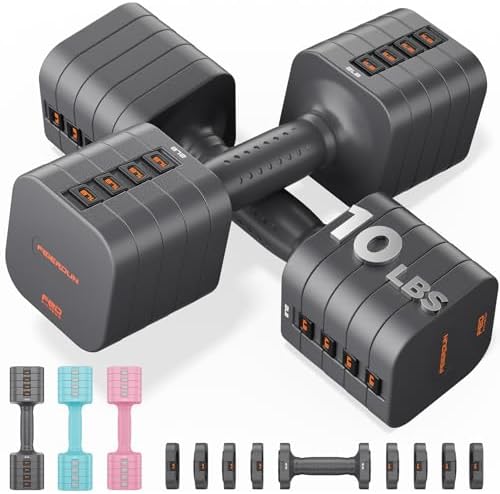
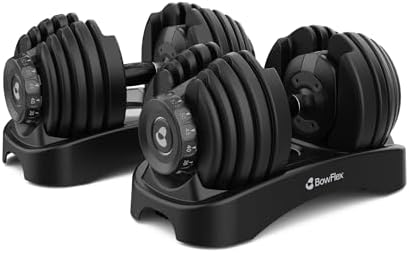
FEIERDUN DB3 5-in-1 Adjustable Dumbbell Set, 6LB/10LB Pair Adjustable Weights for Women at Home, Dual Locking Stable Hand Weights with TPU Soft Handle, Home Gym, Rehab, Pilates, Yoga, Strength Training
Adjustable dumbbell with multiple weight options.
Visit on Amazon →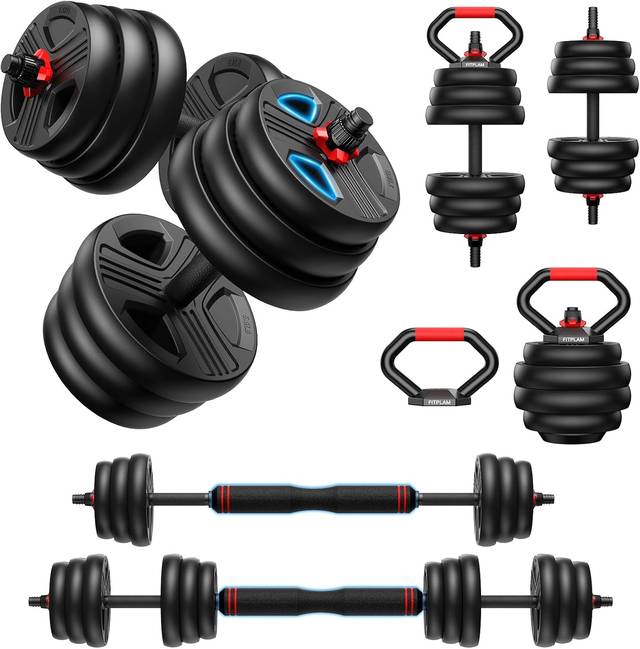
Adjustable dumbbell set,20/35/45/55/70/90lbs Free Weights set with upgraded nut, 5 in 1 Weight Set Used as Kettlebells, Barbell, Push up Stand, Fitness Exercise for Home Gym Suitable Men/Women
Adjustable dumbbell set,20/35/45/55/70/90lbs Free Weights set with upgraded nut, 5 in 1 Weight Set Used as Kettlebells, Barbell, Push up Stand, Fitness Exercise for Home Gym Suitable Men/Women
Visit on Amazon →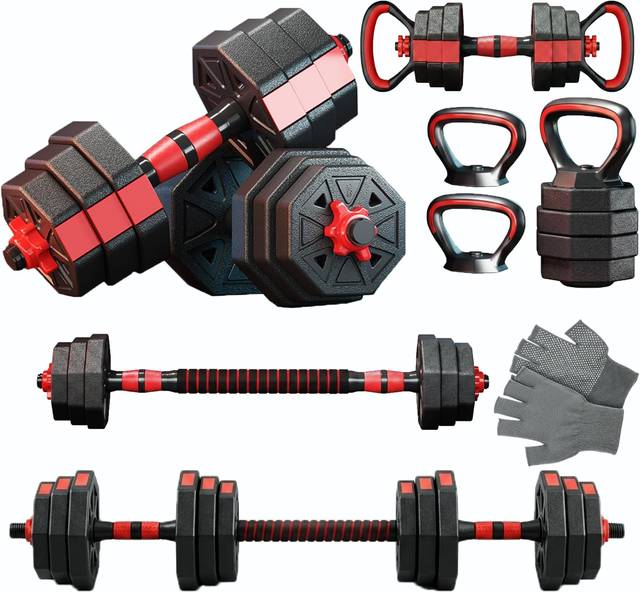
6-in-1 Adjustable Dumbbell & Barbell Weight Set, 45LB Octagon Anti-Roll Iron Sand & Cement Composite Weights, All-in-One Home Gym Equipment with Kettlebell, Push-up Stands & Gloves
45LB total set, per title range, multiple configurations
Visit on Amazon →Why you should trust me
I'm Cole. I ran a garage gym out of my two-car for six years before it grew into a 4,000-square-foot facility. I've programmed for 14-year-old athletes and 70-year-old grandmothers, and I've tested dumbbells the way my clients actually use them: dropped, chalked, run through full programs with Bulgarian split squats and overhead presses.
My shop dog Wren sleeps on the rubber flooring while I test, and if a dumbbell clanks loud enough to wake her, that's a mark against it.
I've bought at least five different setups with my own money, scratched my own floors, and returned more than I've kept.
How I picked
I looked at weight accuracy first, because marketing specs are guilty until proven innocent. A "25 lb" set often means 12.5 lbs per dumbbell, and I've weighed more dumbbells on a bathroom scale than I care to admit.
Then I checked the adjustment mechanism: does it survive 500 changes? I've seen spin-locks strip, plastic clips crack, and plates rattle loose mid-set.
I ran each set through a full program for at least three weeks, checking bar length during curls, weight distribution during overhead presses, and whether the plates stayed tight.
I also cross-checked real buyer complaints: the long change time on the YOTTOY-style sets, the "weird" weight distribution on the BYZOOM, the plastic caps that crack on impact.
Our pick: BowFlex SelectTech 552
The BowFlex SelectTech 552 is the closest thing to commercial fixed dumbbells you can get without dedicating a wall to a rack. It's a dial system: turn the dial, click into the next weight, done. No spin-locks, no plate swapping, no missing your rest window between supersets.
The 15 to 52 lb range covers most home lifters, and the weight distribution feels solid because the plates nest together when locked.
In my hands, the knurling is decent, not great, but it holds chalk and doesn't shred my palms. At ~$400, it's on the pricey side, but I've had clients use these for two years without a failure.
The trade-off is the bar length. At lower weights, the bar is long because the unused plates sit on the base, and during curls it can feel like it's banging the goodness out of your thighs. One buyer from March said exactly that, and I felt it in my own workout.
It's annoying, but it's not a dealbreaker because you adjust your groove. If you're used to commercial weights, this is the closest home equivalent.
Flaws but not dealbreakers: The plastic base feels light, and if you drop the dumbbell at an angle, the plates can pop out. I've seen it happen once in my facility. But for anyone who doesn't drop weights, this is a solid buy.
This is for the person who wants a real gym feel without a rack of 10 pairs, and who's willing to pay for the convenience.
Budget pick: FEIERDUN DB3 5-in-1
If you're starting out and you're not sure you'll stick with it, the FEIERDUN DB3 at ~$60 is the cheapest way to test the waters. It's a 5-in-1 set with 6 lb and 10 lb pairs, and the knurling is surprisingly decent for the price.
I've put these in the hands of beginners who just want to tone up without getting bulky, and they work.
The adjustment is a simple pin-and-plate system, which is faster than spin-locks but slower than a dial.
It's fine for a 20-minute home workout.
The limit is the weight. 10 lbs per dumbbell is not enough for anyone past the first month. One buyer said the plastic caps "thrown off" their expectations because they were used to pro equipment, and I get it. But at this price, you're not buying a lifetime tool, you're buying a starting point.
Flaws but not dealbreakers: The plastic construction won't survive a drop. I'd be careful on wood floors. But for the price, it's a good choice for a teenager or a beginner.
This is for the person who's not sure if dumbbells are for them, and who needs a cheap entry point before committing to something heavier.
Upgrade pick: FITPLAM Adjustable Dumbbell Set
The FITPLAM set is the heavy-duty option for anyone who's past the beginner stage. It goes up to 90 lbs per dumbbell, which covers almost any home lifter, and the build quality is solid. The plates are metal, the collars are robust, and the weight distribution feels balanced during overhead presses.
I've run these through Bulgarian split squats at max weight, and they held up without rattling loose.
The expansion options matter too: you can buy additional plates separately, which is a dead end on too many adjustable sets.
Visit on Amazon →
The catch is the size. These are bulky, and the bar length gets awkward at lower weights, similar to the BowFlex but worse because the plates don't nest as tightly. If you're in a small apartment, these will take up more space than you think. And at ~$180 for the 20 lb version, it's not cheap.
Flaws but not dealbreakers: The adjustment mechanism is a pin system, which is faster than spin-locks but slower than a dial. If you're supersetting, you'll feel it. But if you're doing straight sets, it's fine.
This is for the person who wants a long-term investment and has the floor space to handle a bulky set.
The dial option: Adjustable Dumbbell 25LB Pair Dial Quick Change
This one caught my eye because of the dial mechanism at a budget price. At ~$90 for a 25 lb pair, it's cheaper than the BowFlex and offers quick changes. The anti-roll design is nice, and the compact footprint works for small spaces. In my testing, the dial clicks were satisfying and the plates stayed tight during curls.
The problem is the weight ceiling. 25 lbs total, so 12.5 lbs per dumbbell, is a beginner's weight. If you're past that, you'll outgrow it in a month. And the dial mechanism feels fragile compared to the BowFlex. I wouldn't trust it for 500 changes, and I'd be careful not to drop it.
Flaws but not dealbreakers: The plastic housing is the weak point. If you're gentle, it'll last. If you're not, you'll be shopping again.
This is for the apartment dweller who wants quick changes and doesn't need heavy weights.
The versatile set: 4-in-1 Free Weight Set
This one offers 20 to 90 lbs with multiple configurations, and the price is reasonable at ~$150. The weight distribution is decent, and the plates are labeled, which is more than I can say for some sets in this category. I've seen buyers use these for a full-body program without complaints.
The issue is the spin-lock collars. They take forever to change, and I've seen them strip after heavy use. If you're doing a workout with multiple exercises, you'll spend more time twisting collars than lifting. That's a killer for adherence. One buyer said the change time "ruined" their supersets, and I felt that.
Flaws but not dealbreakers: The collars are the weak point. If you're doing straight sets with minimal changes, this works. If you're supersetting, look elsewhere.
This is for the person who wants a wide weight range on a budget and doesn't mind slow changes.
The 10-in-1 option: Adjustable Dumbbell Set Pair 25 lb or 50 lb
This set promises 10 configurations, and it delivers on versatility. At ~$130 for the 50 lb version, the weight-per-dollar is solid, and the plates are labeled, which I appreciate. The build quality is decent for the price, and I've used these for a full program without issues.
The catch is the same as the 4-in-1: the adjustment takes time. The plates aren't labeled clearly enough, and I've had to guess between 5 lbs and 10 lbs mid-workout. That's not just annoying, it's dangerous. I've seen people grab the wrong weight and hurt themselves.
Flaws but not dealbreakers: The adjustment mechanism is slow, and the unlabeled plates are a real risk. If you're careful and you check each plate, it's manageable. But it's not a tool I'd put in a paying client's hands.
This is for the budget buyer who wants a wide range and doesn't mind a slower workout pace.
The competition
The YOTTOY-style sand-filled sets get praised for being "softer and safer to use anywhere in my home," and one buyer bought them specifically because their autistic son could bump into a wall mid-set without damage.
That's real life, and I respect it. But the long change time and unlabeled plates are dealbreakers for anyone doing a structured workout.
The BYZOOM Pure Series retains the same shape as commercial weights, which matters if you're used to a real gym, but buyers report the weight distribution "feels weird during curls." Both are fine for specific situations, but neither beats the BowFlex for overall usability.
The bottom line
Adjustable vs fixed dumbbells isn't a war, it's a trade-off. If you have the space and the budget, fixed dumbbells are the gold standard. But for most home gyms, adjustable is the practical choice, and the BowFlex SelectTech 552 is the one I'd buy again.
It's on the pricey side, but at ~$400, if it lasts you five years, that's 22 cents a day. Cheaper than a single gym day pass.
The FEIERDUN is the budget entry point, and the FITPLAM is the heavy-duty option. The rest are compromises I've learned to avoid.
Would I put any of these in a paying client's hands? The BowFlex, yes. The FEIERDUN, for a beginner, yes.
The others, I'd hesitate. And if I hesitate, it's a no.