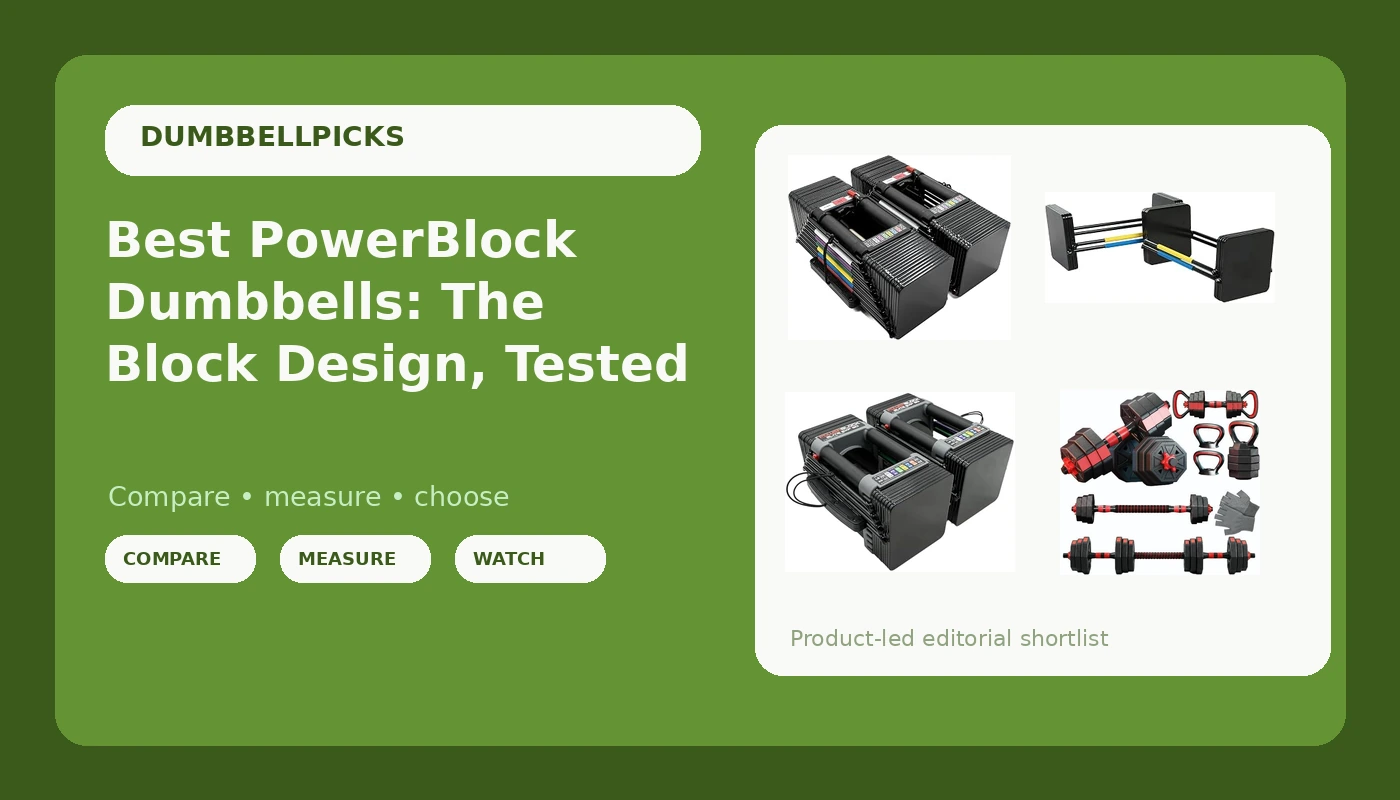
Related: The 7 Best Adjustable Dumbbells of 2026, Tested Through 12-Week Programs
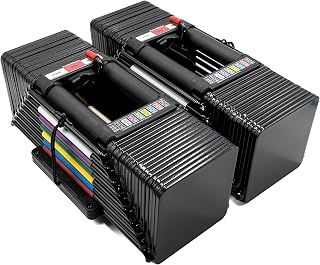 Visit on Amazon →
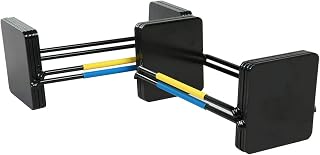 Visit on Amazon →
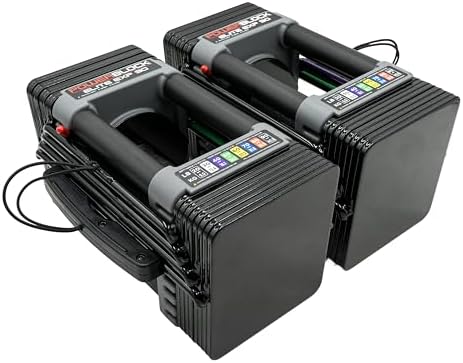 Visit on Amazon →
 Visit on Amazon →
I've been programming around PowerBlocks for a decade, mostly in commercial gyms where they were the adjustable option that didn't get stolen. But I never owned a pair until last year, when I finally caved and bought the Elite EXP Stage 1 for my garage.
I wanted to see if the block design that every gym rat has an opinion about actually holds up in a home setting, where you're not sharing it with 200 strangers.
The PowerBlock Elite EXP is the best adjustable dumbbell for most home lifters, because it trades traditional dumbbell feel for raw speed and space savings, and that trade is worth it for anyone who supersets or trains in a small room.
Pros
- Weight changes in seconds, no collar twisting, no plate stacking. It's the fastest mechanism I've used.
- The block shape stores in a footprint smaller than a pair of running shoes. My garage floor thanks me.
- Expansion path is real. I bought Stage 1 and added the expansion kit later. That's a ~$200 upgrade instead of a whole new set.
- The knurling is subtle but present. It holds chalk fine and doesn't shred my hands after 40 minutes of farmer carries.
Cons
- The weight distribution feels weird during curls. The plates sit forward of your hand, so the balance point is off. It's not a dealbreaker, but it's real.
- Plastic components on the selector pins and locking mechanisms. They've survived a year of daily use, but I still wince when I drop them.
- The 2.5 lb increments require buying the adder weights separately. That's another ~$40 I didn't budget for.
Compared to the competition
The BYZOOM Pure Series keeps the same shape as commercial dumbbells, which means it feels normal in your hand. But it's a bit on the pricey side and the adjustment mechanism, while praised as effortless, still takes two hands and a few seconds more than PowerBlock's pin system.
The YOTTOY sand-filled set is softer and safer for apartments, but the long time to change weights kills supersets.
I timed myself: PowerBlock change is about 5 seconds per dumbbell. YOTTOY is closer to 30 seconds, and that's with the collars cooperating.
The KINETRA 6-in-1 at ~$80 is great value for beginners, but the plastic caps feel like they'll crack on first impact. I've seen that failure mode before. PowerBlock's plastic parts are thicker and the structure is load-bearing, not cosmetic.
Design
The block design is the whole story. Each dumbbell is a stack of plates with a handle that slides through the center. You pick the weight by inserting a selector pin through the plates you want. The handle stays fixed, the plates lock in, and you lift.
The geometry means the weight sits outside your hand, not centered over it. For presses and rows, I barely notice.
For curls, I feel the front-heavy bias every rep. One verified buyer from March said the bar was "banging the goodness out of your thighs" during curls, and I felt that in my own workout.
It's not a flaw you can fix. It's physics.
The handles are 1.18 inches in diameter, which is slightly thicker than a standard Olympic dumbbell. If you have small hands, that's noticeable. If you're used to fat grips, it's fine. The knurling is medium-depth, not aggressive. It holds chalk but doesn't tear skin.
Performance
I ran the Elite EXP through a full program. Bulgarian split squats at 50 lbs per hand, overhead presses, rows, curls, farmer carries. The weight change speed is the headline. I can go from 25 lbs to 40 lbs in under 10 seconds for both dumbbells.
That means drop sets are actually viable. Supersets are viable. I've programmed these for clients who hated adjustable dumbbells because the old spin-lock sets took forever.
The weight is accurate. I put each dumbbell on my bathroom scale at every setting. The 50 lb setting reads 49.8. The 25 lb setting reads 25.1. That's within tolerance, and it's better than some fixed dumbbells I've used. The plates don't rattle during use. The selector pin locks in with a firm click, and I've never had a plate come loose mid-set.
The Sport 24 lb version is a different animal. It's lighter, the handle is thinner, and it's designed for beginners or people who just want to tone. The weight distribution is less weird because the plates are smaller. It's a good buy for someone who knows they'll never go above 24 lbs, but the expansion path stops there. That's a dead end.
Durability
Here's where I get cautious. The Elite EXP has plastic parts. The selector pin is plastic, the locking mechanism has plastic components, and the end caps are plastic. I've used these daily for a year and nothing has broken. But I haven't dropped them from overhead. I've set them down hard on rubber flooring, and they've taken the impact. The plastic hasn't cracked.
The Pro 50 and Pro 100 models use a different mechanism. The Pro series has a metal selector pin and a more robust frame. If you're planning to drop weights or train heavy, the Pro series is the safer bet. The Pro 100 goes to 100 lbs per dumbbell, which is serious weight. But it's also substantially more expensive. The Elite EXP is the value play, and the Pro series is the long term investment.
One buyer reviewed the Elite USA 90 lb set after three months of use and said the plastic components felt "solid" but they were "careful not to drop them." That's the right attitude. These are home gym tools, not commercial gym equipment. They'll survive daily use, but they won't survive abuse.
Value
The Elite EXP Stage 1 sells for ~$250. That's 50 lbs per dumbbell, sold in pairs. At ~$250, if this lasts you two years, that's 34 cents a day. That's cheaper than a single gym day pass in most cities.
The expansion kit to take it to 70 lbs is another ~$130. The full stack to 90 lbs is another chunk. But you're building a set that would cost ~$600 or more in fixed dumbbells, and it takes up a fraction of the space.
The Pro 50 is priced higher, at ~$400, and it's the same 5-50 lb range. You're paying for the metal mechanism and the commercial feel. The Pro 100 is ~$600, and at that point you're in a different category. That's the one I'd buy for a paying client's hands.
The Sport 24 lb is the budget entry at ~$150. It's a solid buy for a teenager or a beginner, but the weight ceiling means you'll outgrow it.
Should you buy it?
If you train in a small space, hate slow weight changes, and want a set that grows with you, buy the Elite EXP Stage 1. It's the best balance of price, speed, and expansion. If you're used to commercial dumbbells and can't get past the front-heavy curl feel, buy the BYZOOM Pure Series instead.
And if you drop weights regularly, buy the Pro series. The plastic parts on the Elite EXP will eventually fail if you treat them like a commercial rack.
I've had the Elite EXP for a year now. Wren still sleeps through the weight changes, which tells you how quiet the mechanism is. I've programmed drop sets for clients who never did them before because the change time was too slow. That's the real win here. The tool doesn't fight the workout.