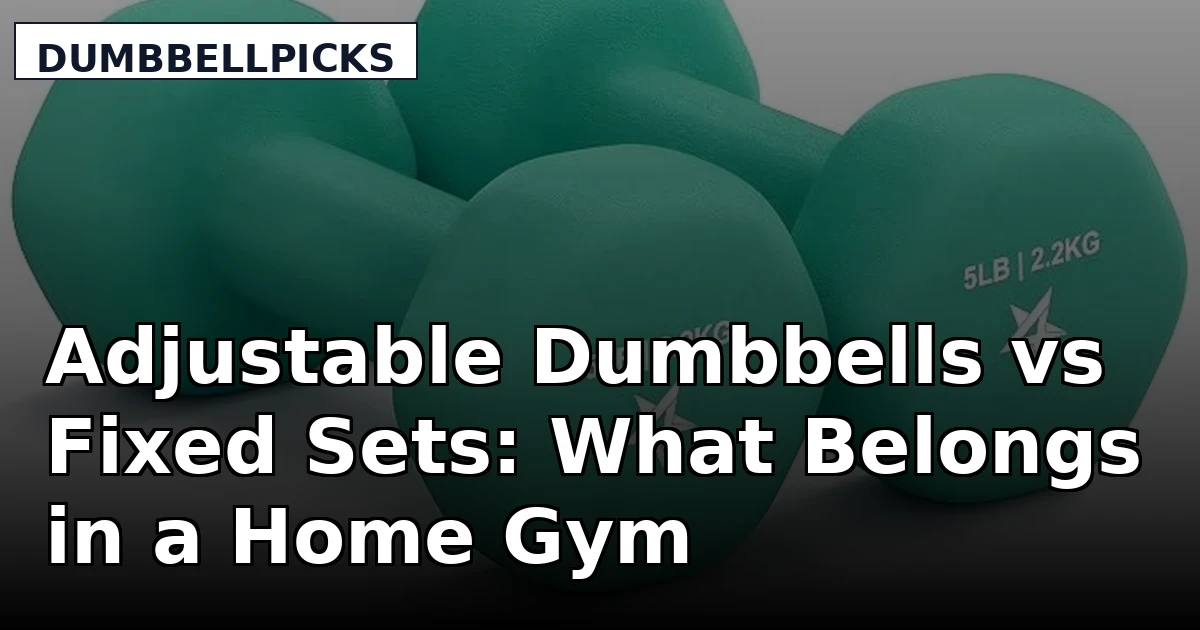
I bought my first pair of dumbbells out of a classified ad for forty bucks, and I still remember the wobble in the collars. Twelve years later I coach out of a facility in Denver, I have programmed for fourteen-year-old athletes and for grandmothers in their seventies, and the question I get most often has not changed at all: which adjustable dumbbells for home gym training should I actually buy? The answer is not one product. It is a small, deliberate stack of purchases, and the stack looks different depending on who is lifting.
Here is the short version. A quick-adjust set is the best first buy for most people, a light fixed pair is the best second buy, and a book that teaches the movements is worth more than a third set of iron. Everything below explains why, and where each of these four picks wins and where it loses.
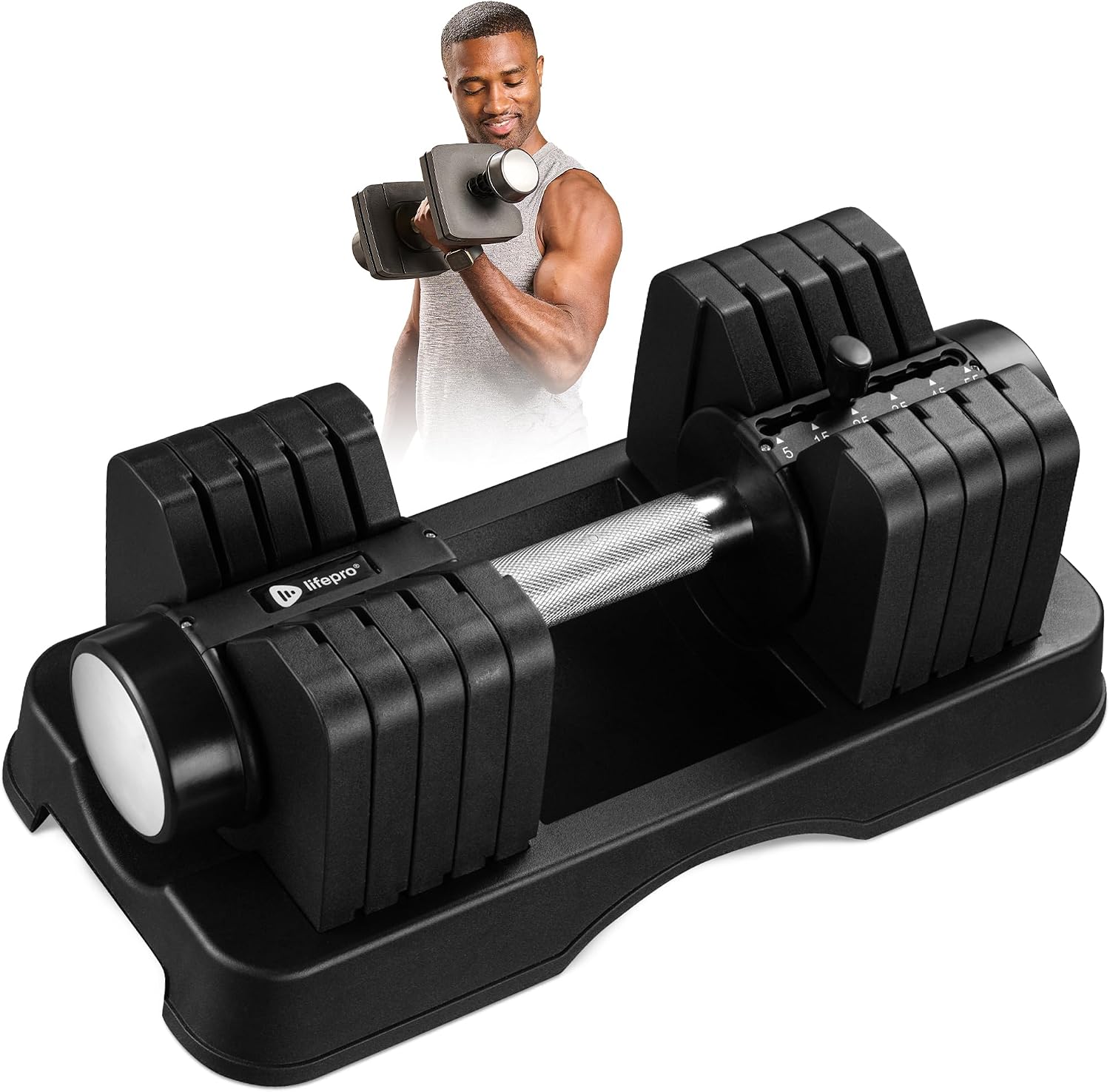
Lifepro Adjustable Dumbbells & Weights for Home Gym, Quick-Adjust
One pair covers a wide range of pressing, rowing, and curling without a rack of fixed iron, and the quick-adjust pitch is real for garage gyms with limited space
The mechanism is the entire product, so you are trusting a selector you cannot inspect through a screen, and the handle feel is not the same as a fixed set
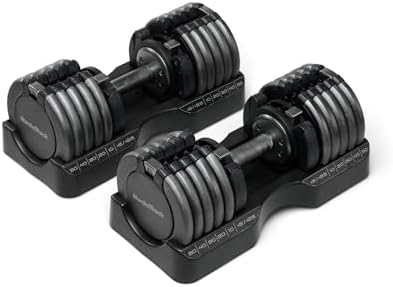
NordicTrack Select-a-Weight Adjustable Dumbbells
Select-a-weight design stores in a cradle, which keeps the set organized and makes the change between warmup and working weight fast
The cradle footprint is the tax, and a selector that does not seat cleanly will shift under load, which is the one thing you cannot tolerate

Yes4All Neoprene Dumbbells, Pairs and Sets with Rack for Home Workouts
Cheap way to cover warmups, high-rep work, raises, and beginner training, and the neoprene coating is kind to floors, knuckles, and 6 a.m. noise
Fixed weight means the ceiling arrives fast, and the rack still takes floor space in a room that is already tight
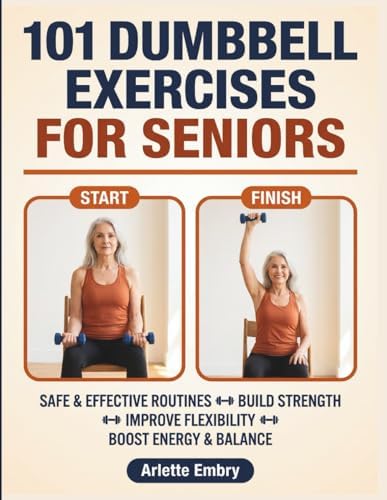
101 Dumbbell Exercises for Seniors: The Complete Strength Training Guide for Men and Women Over 60 to Build Muscle, Prevent Falls, and Stay Independent for Life
Teaches the movements and the progressions that make a light dumbbell useful, which is the part most people skip entirely
It is not hardware, and no book will fix a set with loose collars or a selector that jams
Prices and availability were captured from Amazon Creators API and may change.
How I judge a dumbbell before it goes in a client's hands
Knurling is the soul of a dumbbell. Run your hand down the handle. If it feels like a painted broomstick, you will be fighting grip on every set, and fighting grip is how form falls apart on rep eight. If it feels like a cheese grater, you will be bleeding by week two and you will start wearing gloves, which is a workaround, not a solution. The good middle is a diamond pattern you can feel through chalk and that does not shred the callus line on your palm.
The second question is the mechanism. On an adjustable set, the dial or the selector is the product. The weight range is marketing. A smooth mechanism that repeats the same click every single time beats a wider range that jams when your hands are chalky. I want a selector that seats with a click I can hear across the room and that never needs a second look to confirm it is locked.
Third, plates should not wobble. A fixed dumbbell with a loose head is a weld that is lying to you, and it will get looser. On an adjustable set, a plate that shifts inside the cradle means the load is moving while you are under it, and that is how wrists get tweaked on a bench press.
Fourth, and this is the one that decides it: would I put this in a paying client's hands on a Monday morning and walk away? If the answer is maybe, the answer is no.
Quick-adjust sets: Lifepro and NordicTrack
Two of the four picks here are adjustable, and they are not the same animal.
The Lifepro Adjustable Dumbbells & Weights for Home Gym, Quick-Adjust is built around the promise in its own name. Quick-adjust designs typically move through the weight stack in one motion, and the pitch is speed: you finish a warmup set and go straight into your working set without walking to a rack. In a garage gym, where the rack is six feet away and your rest timer is already running, that matters more than people admit. Check current Amazon price before you commit, because adjustable sets move around more than fixed iron.
What to verify before you buy any quick-adjust pair: does the handle fit two hands for goblet squats and one hand for rows without your grip feeling pinched, does the selector seat with a click you can feel through the handle, and does the set sit in its cradle without you guiding it in like a key in a lock. If the change takes two hands and a second look, you will stop changing it, and a set you do not change is just a heavy set.
The NordicTrack Select-a-Weight Adjustable Dumbbells tell you the design philosophy in the name. You select the weight, which usually means a pin or a selector that picks up plates from a cradle. That is a clean system and it keeps the set organized, which matters in a room where everything lives on the floor. The trade-off is footprint. A cradle takes up real estate, and real estate is the first thing a home gym runs out of.
The honest limit on every adjustable set: do not drop them. A fixed rubber hex dumbbell can take a drop from a client at 6 a.m. and survive. An adjustable set is a machine with moving parts, and machines do not enjoy being dropped. If you train to failure on dumbbell presses, that is a real consideration.
Light fixed pairs: the Yes4All neoprene set
Every home gym I have ever set up gets one pair of light fixed dumbbells, and it is never the pair people are excited about. The Yes4All Neoprene Dumbbells, Pairs and Sets with Rack for Home Workouts is exactly that purchase, and it earns its place.
Neoprene coating does three things well. It is quiet on a hardwood floor, which matters if you train before anyone else in the house is awake. It is friendly to knuckles during raises and to floors when you set them down between sets. And it does not chew up your hands, which makes it a genuinely good choice for beginners, for rehab work, and for anyone over 60 who is starting from zero. The rack keeps a small set organized instead of scattered under the couch, which is where light dumbbells go to die.
The ceiling is the catch. Neoprene sets are light by design, so you will outgrow them for pressing and rowing within a few months of consistent training. They are a warmup tool, a high-rep tool, and a teaching tool, not a strength tool. If you are honest with yourself about that role, they are one of the best value purchases in a home gym.
The programming gap: the seniors book
The 101 Dumbbell Exercises for Seniors is a book, and its presence in a dumbbell comparison is not a mistake.
The most common failure I see is not equipment. It is programming. Someone buys a set, does the same three exercises for six weeks, gets bored or sore, and the dumbbells end up in a closet. That failure is worse for clients over 60, where the goal is not a bigger curl. The goal is standing up off the floor without help, catching yourself when you trip, and carrying groceries up a flight of stairs at 75.
A guide that lays out exercises and progressions for that population does more for those goals than another ten pounds of iron. It gives a person a plan to follow instead of a set to stare at. The trade-off is obvious: it is not hardware, it will not fix a rattling set, and it will not help someone who already has a program and just needs more load. Check current Amazon price and think of it as the cheapest piece of the whole stack.
Trade-offs nobody mentions
Floor space is the hidden cost. A cradle-based adjustable set plus a light rack plus a bench means you have committed a corner of a room permanently. Measure before you buy, not after.
Noise is the second. Adjustable sets rattle. That is not a defect, it is physics. Neoprene is silent. If you train at 5:30 a.m. above a sleeping household, that difference decides more than the weight range does.
Grip changes with the handle. Fixed sets from good brands have knurling you can feel. Some adjustable handles are smooth enough that chalk slides instead of sticking. Run your hand down the handle before you commit, and if you cannot do that in person, read carefully and buy from a seller with a return window.
Resale is the last one. Fixed dumbbells hold value and can be sold in a day. Adjustable sets with a discontinued mechanism do not. That is not a reason to avoid them, but it is a reason not to buy the cheapest one you can find.
Who should buy what
A small-space lifter who trains alone and wants one set: the Lifepro quick-adjust pair. It covers the most ground per square foot, and the quick-change pitch is the right priority when your rack is a bench and a corner of the garage.
Someone who wants an organized, repeatable setup: the NordicTrack Select-a-Weight pair. The cradle keeps it tidy and the selector makes the weight change part of the routine rather than a chore.
A beginner, a senior, or anyone rehabbing: the Yes4All neoprene set with the rack. Light, quiet, forgiving, and cheap enough that it does not have to be the last thing you buy.
Someone with equipment and no plan: the seniors book. It is the only pick here that fixes the reason most home gyms fail, which is not the dumbbells.
Bottom line
You do not need 5 to 50 in one set. You need a set that does not rattle, a light pair you will actually use, and a plan that tells you what to do on Tuesday. Buy the adjustable pair for load, the neoprene pair for everything else, and the book if you or someone in your house is starting from zero and needs the movements spelled out. That stack costs less than one premium fixed set and it will get used far more often.