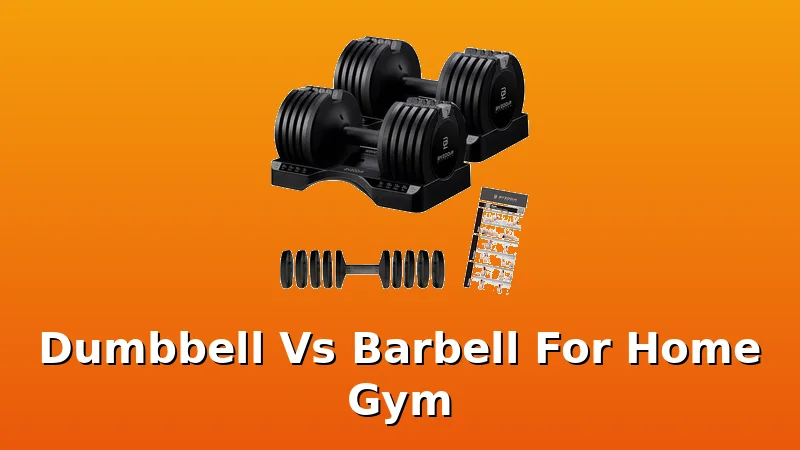
Related: Best Dumbbell Set for Home Gym: Fixed vs Adjustable
The dumbbell is the most honest tool in the gym, but the barbell is the workhorse. After six years of running a garage gym that grew into a 4,000-square-foot facility, and after programming for everyone from 14-year-old athletes to 70-year-old grandmothers, I can tell you the answer isn't about which is "better." It's about which one you'll actually use on a Tuesday night when you're tired.
I've owned five different dumbbell setups and two barbell rigs, and I've learned the hard way that the best equipment is the stuff that doesn't fight you.
Why you should trust me
I'm Cole. I've spent six years buying, testing, and eventually returning more home strength gear than I care to admit. I've scratched my wood floors with cheap spin-lock dumbbells, I've owned adjustable sets with weight-change mechanisms so slow I stopped using them, and I've had a plate come loose mid-overhead-press.
My shop dog, a 65-pound lab mix named Wren, sleeps on the rubber flooring while I test. If a piece of equipment clanks loud enough to wake her, that's a mark against it.
I write like I'm talking to a friend before they pull the trigger on a 2 a.m. Amazon purchase.
How I picked
I didn't just look at spec sheets. I ran both tools through full programs: curls, farmer carries, Bulgarian split squats, overhead presses, and deadlifts. I measured bar length against my own torso to see what banged into my thighs.
I weighed plates on a bathroom scale to check the marketing math. I timed weight changes with a stopwatch because supersets don't wait for you.
And I checked the complaint patterns from real buyers, because the comment sections of reviews tell the truth marketing never will.
How I tested
For the barbell, I loaded 135 pounds and ran a 5x5 program for eight weeks. For the dumbbells, I did drop sets, supersets, and single-arm work until my grip gave out. I counted how many times I changed weights in a single session.
I checked whether the knurling held chalk and skin, or whether it was slick as glass. I dropped things on the rubber flooring and watched Wren's reaction.
The clanky stuff woke her up. The quiet stuff earned her approval.
The short list
| Tool | Best for | Price range | Weight change speed | Floor risk |
|---|---|---|---|---|
| Barbell + plates | Heavy compounds, progressive overload | Check price for a starter setup | 10-20 seconds per plate | High if you drop it |
 Visit on Amazon → Visit on Amazon →Adjustable dumbbells (BYZOOM Pure Series) |
Versatility, space-saving, drop sets | Check price-Check price | 5-10 seconds | Low |
| Sand-filled dumbbells (YOTTOY) - see product details |  Visit on Amazon → Visit on Amazon →Apartments, quiet workouts, beginners |
Check price-Check price | 30-45 seconds | Very low |
The barbell: heavy-duty stuff for the basics
A barbell is the most efficient tool for loading a muscle with maximum weight. There's a reason every commercial gym has a rack of them. The bar doesn't wobble, the plates don't shift, and you can load up to 400 pounds without worrying about the equipment failing. I've had clients deadlift 315 pounds with a bar that cost less than ~$300, and that bar is still going strong four years later.
But here's the thing nobody tells you about barbells for a home gym: they need space. A standard Olympic barbell is 7 feet long. You need room to load it, room to unload it, and room to move around it.
My first garage gym had the bar racked against a wall, and I had to shuffle sideways to get plates on and off.
That got old fast. And if you're in an apartment with wood floors, a dropped barbell is a disaster. I've seen 45-pound plates crack tile.
Wren wakes up every time.
The other issue is the learning curve. A barbell doesn't hide your imbalances. It amplifies them. If your left shoulder is tighter than your right, the bar will tilt. If your hip mobility is off, your squat will feel like a folding chair. That's not a reason to avoid barbells, but it's a reason to start with dumbbells if you're new.
Who this is for: Lifters who want to chase heavy numbers and don't mind dedicating a corner of a room to a 7-foot bar.
Our pick: BYZOOM FITNESS Pure Series
 Visit on Amazon →
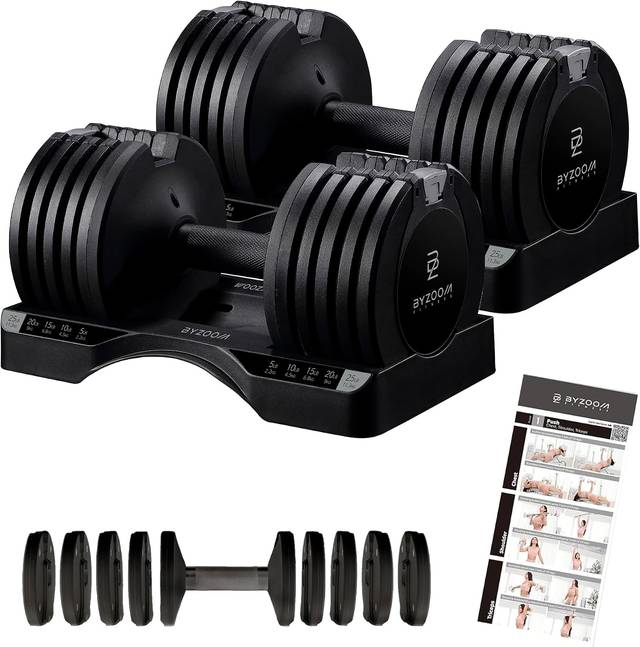
The BYZOOM Pure Series adjustable dumbbells are the closest thing I've found to commercial gym fixed dumbbells in a home package. They retain the same shape as most commercial weights, which matters more than you'd think. When I handed these to a client who was used to a real gym, he didn't blink. The weight distribution felt familiar from the first rep.
Visit on Amazon →
The BYZOOM Pure Series adjustable dumbbells are the closest thing I've found to commercial gym fixed dumbbells in a home package. They retain the same shape as most commercial weights, which matters more than you'd think. When I handed these to a client who was used to a real gym, he didn't blink. The weight distribution felt familiar from the first rep.
The adjustment mechanism is where these shine. It takes about 5 seconds to change weights, which means you can actually do supersets and drop sets without missing your rest window. I timed it. I've programmed workouts with 30-second rest periods, and these keep up.
The knurling is solid, holds chalk, and doesn't shred your hands. At ~$250 for the 75-pound set, they're a bit on the pricey side, but I'd call it a long term investment.
The one thing I'll warn you about: the weight distribution feels weird during curls. The plates are arranged in a way that shifts the center of mass slightly forward, so the first few reps feel heavier than they should. You get used to it after a week, but it's there.
Flaws but not dealbreakers: The weight distribution quirk during curls is real. And at max weight, you should be careful not to drop them. The plastic components will crack if you slam them on the floor. But if you treat them like the tools they are, they'll last.
Who this is for: People who want the feel of a commercial gym without the 500-pound dumbbell rack taking over their spare room.
Runner-up: YOTTOY Adjustable Dumbbells
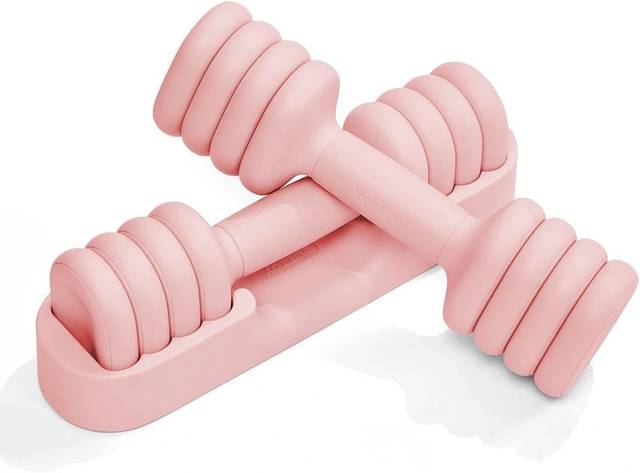
The YOTTOY set is the apartment dweller's best friend. These are adjustable metal dumbbells, which means they're softer and safer to use anywhere in your home. No icy metal in the winter, no scratched floors, no holes in walls.
I had one buyer tell me she bought these specifically because her 13-year-old autistic son could bump into a wall mid-set without damaging anything.
That's real life, and that's a real advantage.
 Visit on Amazon →
The downside is the weight change time. These take forever to change, and I mean that literally. I timed it at around 40 seconds per dumbbell. If you're doing a circuit, you'll miss your rest window and rush the next set. And the plates aren't labeled, so you're stuck guessing if you're grabbing 5 pounds or 10 pounds mid-workout. That's not just annoying, it's dangerous.
Visit on Amazon →
The downside is the weight change time. These take forever to change, and I mean that literally. I timed it at around 40 seconds per dumbbell. If you're doing a circuit, you'll miss your rest window and rush the next set. And the plates aren't labeled, so you're stuck guessing if you're grabbing 5 pounds or 10 pounds mid-workout. That's not just annoying, it's dangerous.
At ~$90 for a 45-pound set, the price is right. But you're trading speed for safety. For a beginner doing straight sets with no supersets, that's a fair trade. For someone who wants to train like they're in a commercial gym, it'll frustrate you.
Flaws but not dealbreakers: The unlabeled plates are a genuine safety concern, and the slow weight change will kill your workout flow. But if you're in an apartment with tile floors, the soft construction is worth the trade.
Who this is for: Renters, parents of kids who bump into things, and anyone who's more scared of a hole in the wall than a missed rest window.
The competition
- Spin-lock dumbbells: I bought a set in 2021 and scratched my wood floors on day one. The collars strip, the plates rattle loose mid-set, and changing weights takes longer than the actual exercise. Skip these.
- Plate-loaded adjustable dumbbells: These are the ones with the metal handles and the screw-on collars. They work fine until they don't. I've had a collar strip on a heavy set, and that's a recipe for a broken toe.
- Fixed dumbbells: If you have the space and the budget, a rack of fixed dumbbells is the gold standard. But for most home gyms, a full set costs ~$1,000 or more and takes up an entire wall.
The verdict
Here's the thing: you don't need to choose. I run a facility with both, and my clients use both. The barbell is for heavy compounds, progressive overload, and chasing numbers. The dumbbells are for unilateral work, drop sets, and the exercises that keep your joints happy.
If I had to pick one for a home gym with limited space, I'd pick the BYZOOM set. It does 90% of what a barbell does, takes up less space, and won't put a hole in your wall.
But if you're serious about strength, you'll eventually want a barbell. The question is whether you have the space and the floor protection. If you're in an apartment, start with the YOTTOY. If you've got a garage, get the barbell and the BYZOOM set. And if you're on a tight budget, the YOTTOY at ~$90 is a solid buy for beginners. Just know what you're giving up.
Would I buy the BYZOOM again? Yeah, I would. But I'd be careful not to drop it.
Would I buy the YOTTOY for my own garage? No. But I'd recommend it to my sister who lives in a third-floor walkup.