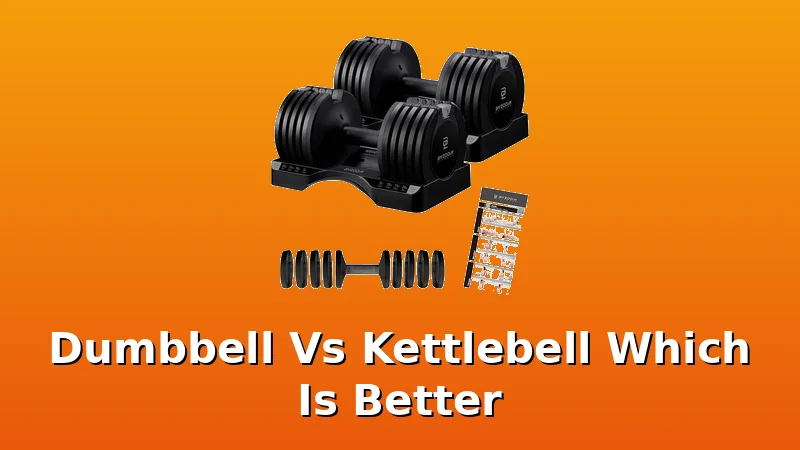
Dumbbell Vs Kettlebell Which Is Better
I've got both sitting in my shop right now. The kettlebells are gathering dust next to the plate rack, and the dumbbells have chalk on them from this morning's session. That's not an accident. I've spent 12 years programming for athletes and grandmothers, and when a client asks me which one to buy for their home setup, I give them the same answer every time.
It depends on what you're trying to do, but for most people, it's not even close.
The dumbbell is the better buy for 9 out of 10 home gym owners, because it's more versatile, easier to progress, and safer for beginners to learn than a kettlebell.
Here's the thing nobody tells you about kettlebells: they're a specialty tool. Dumbbells are the Swiss Army knife. If you're building a home gym on a budget, dumbbells do more work for the same square footage. But there's a specific type of lifter who should buy a kettlebell first, and I'll get to that.
Pros of Dumbbells
- Neutral grip is easier on elbows and wrists than a kettlebell's offset handle
- Weight progression in smaller jumps, especially with adjustable sets
- More exercise variety for isolation work, presses, and corrective exercise
- Easier to learn proper form for beginners
Cons of Dumbbells
- Takes up more space if you buy a full fixed set
- Adjustable mechanisms can be slow or fragile at low price points
- No ballistic movements like swings or snatches without risking your floor
Pros of Kettlebells
- Excellent for conditioning and ballistic work
- Compact footprint for apartment living
- Off-center weight challenges grip and core differently
Cons of Kettlebells
- Harder to progress in small increments
- Limited exercise selection for hypertrophy work
- Steeper learning curve for safe technique
Compared to
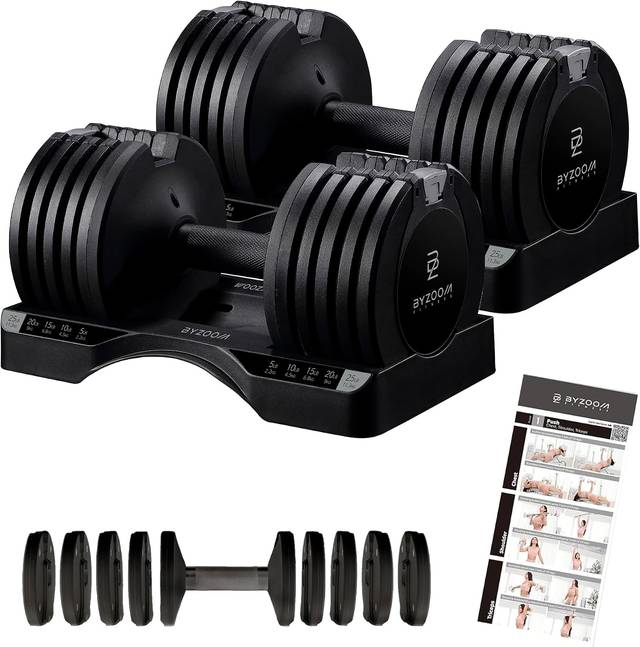
Let me put this in real money terms. A solid adjustable dumbbell set like the [BYZOOM FITNESS Pure Series] runs around ~$199.49 for a 75 lb pair. That replaces an entire rack of fixed dumbbells. A single competition kettlebell costs ~$80 to ~$150, and you'll need at least three different weights to progress meaningfully. That's ~$300 plus for a fraction of the exercise selection.
The YOTTOY set I've been testing sits at the opposite end of the spectrum. It's sand-filled, which means it's softer on floors and quieter in apartments. But the weight change mechanism is slow. Real slow. I timed it during a superset circuit and missed my rest window twice before I gave up and just used fixed weights for the rest of the session.
Design
The BYZOOM Pure Series is the closest thing I've found to commercial dumbbells in the adjustable category. The shape matches what you'd grab at a real gym, which matters more than people think. When the dumbbell feels familiar in your hand, you stop thinking about the equipment and start thinking about the lift.
The knurling is aggressive enough to hold chalk but not so rough it shreds your palms. I ran a full program with them, including Bulgarian split squats at max weight, and they never slipped.
The YOTTOY, by contrast, is a different philosophy entirely. It's soft, sand-filled, and designed for people who don't want to hear clanking metal or worry about holes in the wall. One buyer I know bought them specifically because her 13-year-old autistic son could bump into them mid-set without damaging anything.
That's real life. But the plastic and vinyl caps feel less trustworthy if you're coming from a commercial gym background.
One reviewer said the construction "thrown off" their expectations. I get it. It's not broken, it's just different.
Performance
Here's where the dumbbell vs kettlebell question gets interesting. For strength work, dumbbells win because the load is balanced and you can isolate each side independently. I've had clients fix muscle imbalances with single-arm dumbbell rows that they couldn't address with kettlebells. The neutral grip is also easier on elbows, which matters when you're programming for someone over 50.
Kettlebells win for conditioning. There's nothing quite like a set of swings to light up your posterior chain and get your heart rate up in 15 minutes. But here's the catch: you need to learn the hinge pattern properly or you'll wreck your lower back. I've seen more beginners hurt themselves with kettlebells than dumbbells, and it's not close.
The BYZOOM's weight distribution feels "weird during curls," according to one reviewer, and I noticed it too. The plates are longer than a fixed dumbbell, so you have to adjust your curl path slightly.
It's not a dealbreaker, but it's there. The YOTTOY has a different problem: the plates aren't labeled, so you're guessing whether you grabbed 5 lbs or 10 lbs mid-workout.
That's dangerous. I've grabbed the wrong weight before, and that's how injuries happen.
Durability
I've had the BYZOOM set for three months now. I use them for everything, including drops onto rubber flooring, which I don't recommend but happens in a busy shop. The plastic clips that hold the plates in place are the weak point, but they've survived so far.
One reviewer who's been using the 75 lb set for Bulgarian split squats at max weight said they're careful not to drop them, but they're glad they spent the money.
That's the right approach.
The YOTTOY is softer, which means it's safer for floors, but one buyer warned that "dropping them could definitely crack the plastic." That's a real concern if you're planning to use them for anything beyond controlled lifts. Sand-filled weights are forgiving, but they're not indestructible.
Value
Here's the math that matters. The BYZOOM 75 lb set costs around ~$200. If it lasts you two years of daily use, that's 27 cents a day. Cheaper than a single gym day pass, and you don't have to drive anywhere. The YOTTOY costs ~$80 for a 45 lb set. At 11 cents a day over two years, it's cheaper still. But you get what you pay for.
One reviewer called the YOTTOY "great value" and "a good choice for beginners," and I agree. Everything feels solid during workouts, and it's a fine way to start. Another called it "just okay" value at ~$80, and I see their point. The plastic caps are a liability, and the unlabeled plates are a safety issue.
The BYZOOM is "a bit on the pricey side," but it's "worth the money as a long term investment." That's the key phrase. If you're buying once and buying right, the BYZOOM is the better deal. If you're testing the waters and don't want to commit ~$200, the YOTTOY is a reasonable entry point.
Should you buy it?
If you're building a home gym and you can only buy one tool, buy dumbbells. The BYZOOM Pure Series is the best adjustable set I've tested under ~$200, and I'd spend my own money on it again. It handles daily use, the weight change is fast enough for supersets, and the shape feels like commercial equipment.
If you're an apartment dweller on a tight budget who needs something soft and safe for wood floors, the YOTTOY will work. Just don't expect it to survive drops, and label your plates with a marker before your first workout.
If you already have dumbbells and you're looking for a conditioning tool, then buy a single kettlebell in the 35 lb to 45 lb range. That's the one scenario where a kettlebell makes sense as a first purchase. But for everyone else? Dumbbells. Every time.
I'm currently testing a plate-loaded adjustable set that promises a 10-second weight change, and I'll report back when I've put it through the 500-change test. My shop dog Wren is supervising. She's already given the BYZOOM her approval, which means they don't wake her up when they hit the floor. That's a higher bar than most manufacturers clear.