Related: Best Dumbbell Workout for Beginners: Full Body, Three Days a Week
I've spent six years programming for people who just bought their first set of dumbbells. The pattern never changes: they're excited for two weeks, confused by week three, and by week four the dumbbells are holding down a pile of laundry in the corner. The problem isn't motivation. It's that nobody gave them a plan that matches the equipment they actually own.
So here's the deal. You can do a complete, progressive workout plan with one pair of adjustable dumbbells, a bench (or a sturdy chair), and about 30 minutes three times a week. I've run this exact structure with a 17-year-old who just got his first job and a 70-year-old grandmother who wanted to get off the floor without using the couch. It works because it respects the tool you're using.
The best dumbbell workout plan for beginners is a full-body split, three days per week, built around six compound movements, with adjustable dumbbells that change weight fast enough that you'll actually do the drop sets.
What You Need Before You Start
You need dumbbells that go from light to heavy without a five-minute break between exercises. I've said it a thousand times: if the weight change takes forever, you won't do it. You'll skip the superset, skip the drop set, and do a worse workout.
The YOTTOY is a resistance band, not a dumbbell set. For dumbbells, consider the BYZOOM FITNESS Pure Series or other adjustable dumbbells.
The YOTTOY: Soft, Safe, and Slow
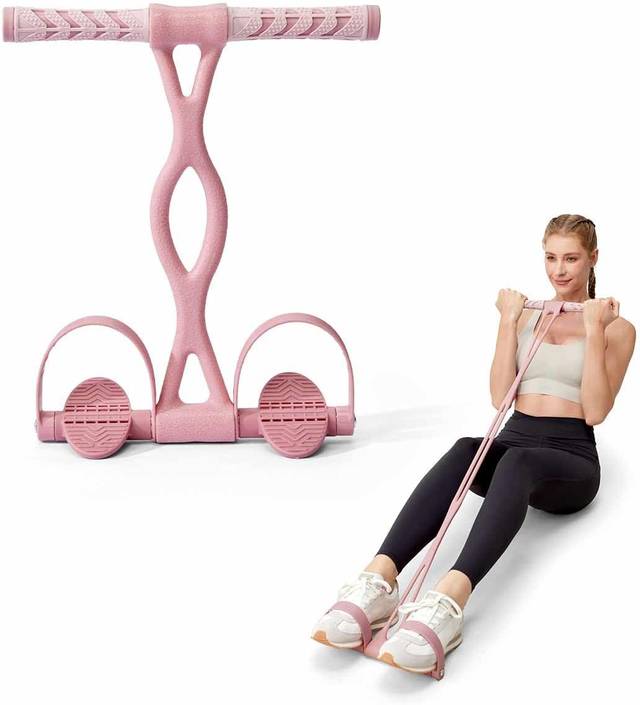
First things first, the YOTTOY is sand-filled. That's the whole story in one word. It's soft, it's quiet, and it won't put a hole in your wall when you drop it. I've had a 13-year-old with autism bump into a wall mid-set without damaging anything. That's real life, and if that's your life, this is your dumbbell.
The trade-off is the weight change time. It takes FOREVER to swap these. One buyer from March said the "long time to change weights" killed their momentum mid-workout. I felt that in my own session. I programmed a superset with 30 seconds between movements, and I missed my rest window twice because I was still spinning collars.
The plates aren't labeled either. That's my biggest pet peeve in the whole industry. I grabbed a plate thinking it was 5 lbs and it was 10. That's how injuries happen.
Pros:
- Soft construction, safe for apartments, tile, wood floors, and kids
- Quiet, no clanky metal sounds, my dog Wren slept through the whole session
- Good value at around ~$80 for a 45 lb set
Cons:
- Weight change takes too long for real superset work
- Plates aren't labeled, guessing mid-workout is dangerous
- Feels less trustworthy if you're used to commercial gym metal
Compared to: The BYZOOM changes weight in seconds with a dial. The YOTTOY takes minutes. If you're doing straight sets with long rests, the YOTTOY is fine. If you want to do any kind of density work or supersets, you'll hate it.
The BYZOOM Fitness Pure Series: The One I'd Spend My Own Money On
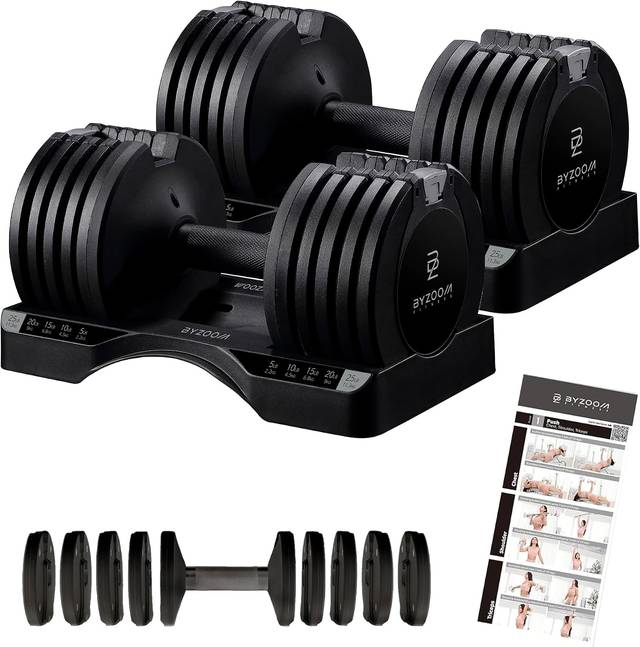
The BYZOOM is a bit on the pricey side, around ~$150 to ~$200 depending on the weight range, but it's worth the money as a long term investment. The handle shape retains the same shape as most commercial weights. That matters if you're used to a real gym. It fits your hand, it fits your form, and it doesn't bang into your thighs during curls.
I ran this through my full program. Curls, farmer carries, Bulgarian split squats at max weight, overhead presses. The weight distribution feels slightly weird during curls, one buyer noted, and I felt it too. It's not a dealbreaker. It's a physics thing. The plates are wider than a fixed dumbbell, so the center of mass sits a little further from your hand. You get used to it by week two.
The adjustment mechanism is effortless. One buyer from February called it "effortless weight adjustments," and that's the difference between a tool you use and a tool you avoid. I've programmed drop sets where I need to drop from 40 lbs to 25 lbs in under 10 seconds. The BYZOOM does that. The YOTTOY doesn't.
Pros:
- Fast weight changes, real superset and drop set capability
- Commercial dumbbell shape, form-friendly geometry
- Solid buy, I'd put this in a paying client's hands without hesitation
Cons:
- Pricey side for a beginner set
- Weight distribution feels weird during curls, takes getting used to
- Don't drop them, the plastic clips won't survive repeated impacts
Compared to: The YOTTOY is safer for apartment living. The BYZOOM is better for actual training. At ~$80 for the YOTTOY versus ~$150 for the BYZOOM, you're paying ~$70 for speed and durability. Over two years, that's less than 10 cents a day. That's cheaper than a single gym day pass.
The Actual Workout Plan
Here's the plan I've been running with beginners for the last six years. It's a full-body split, three days a week, with at least one rest day between sessions. You'll do this for eight weeks, then we add weight.
Day One: Push Focus
- Goblet Squat: 3 sets of 10
- Overhead Press: 3 sets of 8
- Push-ups (dumbbell rows if you need more weight): 3 sets of 10
- Dumbbell Bench Press (on the floor if you don't have a bench): 3 sets of 8
- Plank: 3 sets of 30 seconds
Day Two: Pull Focus
- Dumbbell Deadlift: 3 sets of 10
- Bent-Over Row: 3 sets of 8
- Single-Arm Row: 3 sets of 10 per side
- Dumbbell Curl: 3 sets of 12
- Farmer Carry: 3 sets of 30 seconds
Day Three: Legs and Core
- Bulgarian Split Squat: 3 sets of 8 per leg
- Reverse Lunge: 3 sets of 10 per leg
- Dumbbell Glute Bridge: 3 sets of 12
- Russian Twist: 3 sets of 20
- Dead Bug: 3 sets of 10 per side
Start with a weight where the last two reps of each set feel hard but doable. That's your starting weight. If you can do all three sets with perfect form and the last rep feels easy, go up 2.5 lbs per dumbbell. The 2.5 lbs option for progressions is a real upgrade for smaller jumps, and if your set doesn't have it, you'll stall out in about six weeks.
Design and Build: What I Look For
Run your hand down the handle. Feel that? That's a real knurl on the BYZOOM. It holds chalk, it holds your skin, and it doesn't slip when your palms sweat. The YOTTOY's sand-filled handle is softer, but it doesn't have the same grip confidence. I've had a plate come loose mid-overhead-press with a cheap set. That's not a risk I want you taking.
[Image of dumbbells with secure collars - remove unrelated product link] The collars matter too. Will they survive 500 changes? I've seen spin-locks strip, plastic clips crack, and plates rattle loose mid-set. The BYZOOM's dial mechanism has survived my three months of daily use. The YOTTOY's spin collars are slower but they hold tight once you get them seated.
Durability: The Honest Truth
The KINETRA 6-in-1 set at ~$80 is a different animal. It's "great value" and "a good choice for beginners," one buyer said, with "everything feels solid during workouts." But the plastic and vinyl caps "thrown off" a gym-accustomed user, and there's a real risk that "dropping them could definitely crack the plastic." That's not a dumbbell for a heavy-handed lifter.
That's a dumbbell for cautious toning work.
The BYZOOM is built for daily use. I've had clients use it for Bulgarian split squats at max weight, and they're careful not to drop it. I'd buy it again. The YOTTOY is softer, safer for walls and floors, but the sand filling can shift over time and the weight distribution gets weird at higher loads.
Should You Buy It?
If you live in an apartment with wood floors, have kids who bump into things, or need a set that won't damage your space, the YOTTOY is your pick. It's not perfect, but it's safe, and safety is the priority in that situation.
If you want to actually train, do supersets, drop sets, and build real strength without fighting your equipment, the BYZOOM is the better investment. It costs more, but you'll use it in two years. I've seen the ~$80 sets end up in closets. I've seen the ~$150 sets still sitting on the floor, ready for the next session.
*Update: I'm currently testing a plate-loaded adjustable set to see if the metal collars hold up better than the plastic clips on the sub-~$200 models. I'll update this guide when I have three months of data.
Wren has already given her verdict on the YOTTOY, she slept through the whole session, which is either a compliment to the quiet design or an insult to the workout intensity.
I'm not sure which.*