Related: Adjustable Dumbbells vs Fixed Sets: Which One Belongs in a Garage Gym
A home gym dumbbell setup is the decision that determines whether you actually train at home or just own equipment. I have coached for 12 years, starting in a one-car garage in Denver and ending up in a 4,000-square-foot facility, and I have watched more people quit over bad dumbbells than over bad programming. The dumbbell is the tool. The rep quality is the workout. A tool that fights you on every set kills the rep quality, and then you stop showing up.
The problem is that dumbbells get sold on two numbers that barely matter: total weight and price. What actually matters is whether the knurling holds chalk without shredding your palms, whether the heads stay where you put them, whether the plates stay tight when you press overhead, and whether the adjustment mechanism still works after a year of daily changes. I keep a log of which handles hold chalk and which ones chew up hands. This guide is what that log says, applied to four products that cover a home setup from the first pair to the last gap.
Buy in this order: a fixed hex set with a rack as your foundation, an adjustable set if floor space is tight, singles to fill the gaps your set leaves behind, and a programming book so you do not waste the first six months guessing.
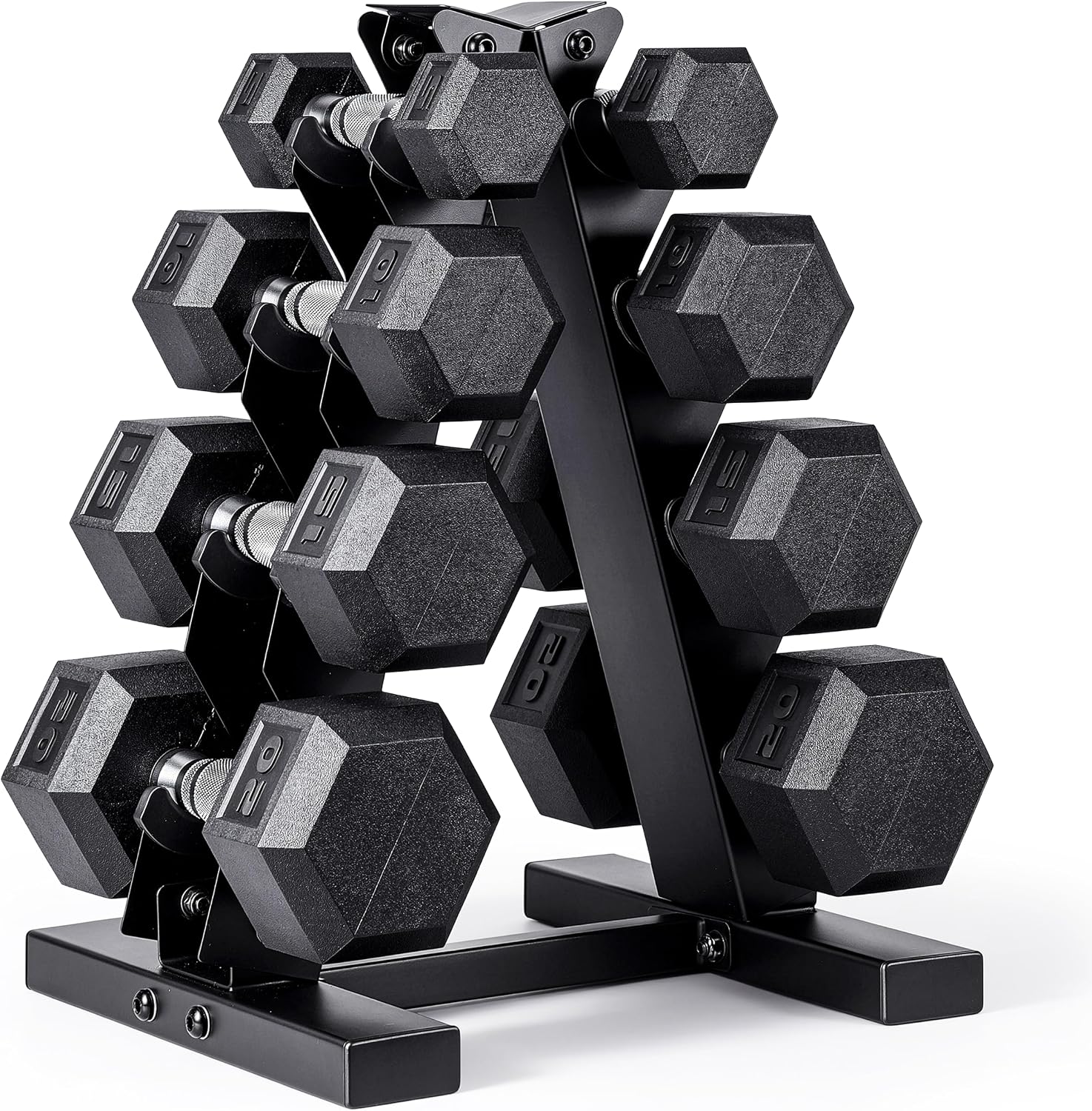
Best Overall: CAP 100 lb Rubber Coated Hex Dumbbell Set with Vertical Rack
Rubber coated hex heads are the home gym standard, and it is not nostalgia. Round heads roll. A round dumbbell on a garage floor rolls into a wall, a car, or your ankle. Hex heads stay where you set them down, which matters most at the end of a heavy set when you are breathing hard and not thinking about placement. The rubber coating protects a concrete floor and cuts the clang that makes a garage gym sound like a scrapyard at 6 AM.
This set carries 100 pounds total and includes a vertical A-frame rack, which is the part people underrate. A rack is not storage, it is traffic control. Dumbbells left on the floor are a trip hazard and an excuse to skip the set. An A-frame keeps the pairs upright, off the ground, and reachable in one step, which is what a rack is for.
Chrome handles are the classic choice on a rubber hex dumbbell, and chrome tells you the truth about grip. Run a hand down the handle before you commit. You want a knurl you can feel, diamond or straight, that bites enough to hold chalk but does not file skin off during a set of high reps. Too smooth and you are fighting grip on every press. Too sharp and you are bleeding on farmer carries.
What to check on any rubber hex set: grab a dumbbell by the handle and shake it. If the head shifts or clicks, walk away. The plates should not wobble. If they wobble, the welds are lying to you, and a head that spins loose is a head that eventually comes off.
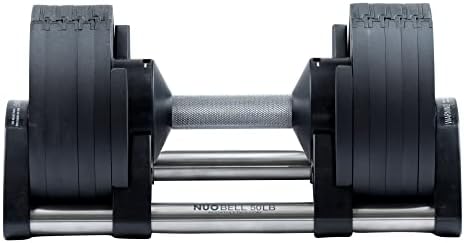
Best Adjustable: Bodytech x Noubell dumbbell
Adjustable dumbbells are about the mechanism, not the weight range. A smooth dial beats a crank that jams. The Bodytech x Noubell changes weight with one hand, which sounds like a small detail and is not. When you are working through a drop set or a superset, you have a dumbbell in one hand and you need the other one loaded now. A two-handed change mechanism forces you to set everything down, reset your stance, and lose the set.
The thing I test hardest on any adjustable is the change mechanism, and I test it the way a client uses it: sweaty hands, chalky hands, in a hurry. Chalk is the killer. It gets into the seams, it builds up, and a mechanism that felt crisp in month one starts dragging by month four. Ask how the collar or dial engages. If it depends on a thin plastic tooth, it will fail. If it depends on a metal lock that seats with a click you can feel through the handle, it has a chance.
The second test is the feel of the loaded dumbbell. A good adjustable feels like a real dumbbell, not a gadget. That means the plates are tight, the handle is a real handle with real knurling, and the whole thing does not rattle when you press it overhead. Rattling is not just annoying. It tells you the tolerance between plates is loose, and loose tolerances are where mechanisms wear out.
Buy an adjustable if floor space is the constraint. A pair of adjustables replaces a rack of fixed pairs, and for a small apartment or a shared garage, that is often the difference between training at home and not training at home.
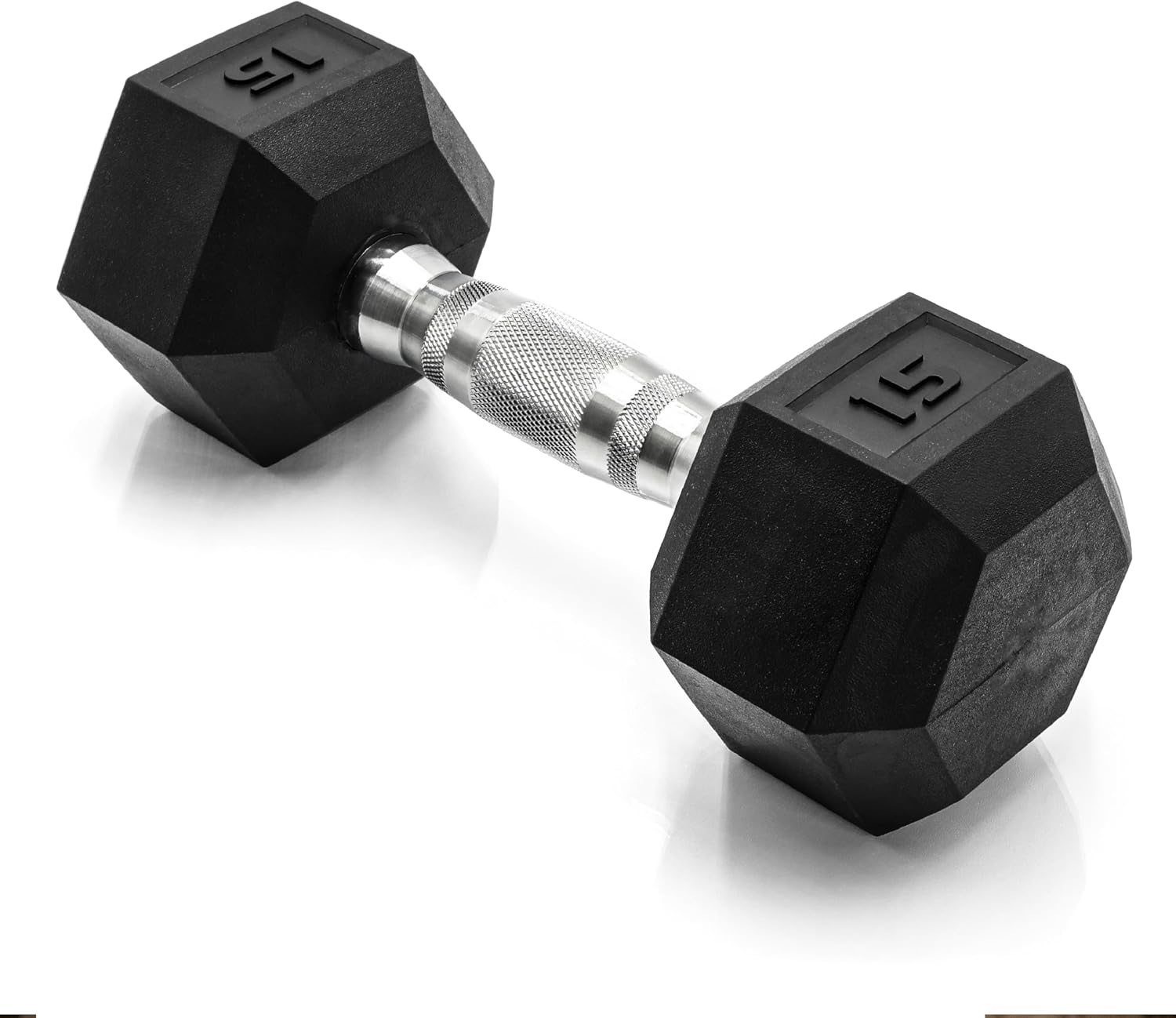
Best Single Addition: CAP Rubber Coated Dumbbell Weights, Singles
Every fixed set has gaps. You get 5s through 25s and then the next jump is 10 pounds, which is a huge jump on a lateral raise or a curl. Buying singles lets you fill exactly the holes you have instead of buying a whole new set to fix one jump.
These are rubber coated anti-roll hex dumbbells sold as singles, with black heads and chrome and comfort grip handles. The comfort grip handle is worth noting if your hands are on the smaller side or if you do a lot of high-rep work, because a thick handle on a light dumbbell is a hand cramp waiting to happen.
Singles are also how you build toward the lifts that fixed sets do not cover well. A heavier single or pair for farmer carries, a lighter single for rehab work, one odd weight for one specific lift. You do not need 5 to 50 in one set. You need a set that does not rattle and a rack that does not tip, and then singles to fill in what the set missed.
Check the same three things: hex head, tight plates, honest knurling. Weight labels should be honest too. If a label is off by more than 2%, that is a manufacturer telling you something about the rest of the process.
Best Programming Companion: Barbell & Dumbbell Training
Equipment without a plan is a coat rack. Barbell & Dumbbell Training: A Weight Training Guide For Strength & Fitness That Won't Go Out Of Fashion is the book I hand to clients who buy their first set and then ask me what to do with it.
The value here is that it is built around the two tools you actually own. A lot of strength books assume a full commercial gym with machines, cables, and specialty bars. This one works from the barbell and the dumbbell, which is exactly the equipment list in a home setup, and it covers the resistance work that does not go out of fashion: presses, rows, squats, hinges, carries.
Pair it with the set above and you have the two halves of a home gym that works. Tools, and a plan for using them.
How I judge a dumbbell
Four questions, in this order.
Does the knurling hold chalk and skin? Run a hand down the handle. You want texture you can feel through a dry palm and through a chalked one. Cosmetic knurling, the kind that looks like a pattern but feels like a painted surface, is the most common lie in budget dumbbells.
Does the adjustment mechanism survive repeated changes? On an adjustable, this is the whole review. Hundreds of changes is the number I use before I trust a mechanism. Anything that jams with chalk in the seams is a mechanism that will jam in your garage.
Do the plates stay tight mid-set? Shake it, press it overhead, set it down hard. Wobble is a warning.
Would I put it in a paying client's hands? That is the final filter, and it eliminates more products than any spec sheet.
Analysis: what the specs leave out
The spec sheet gives you weight and handle material. It does not give you tolerance, knurl pitch, or mechanism quality, which are the three things that decide whether you keep using the thing.
Knurl pitch is the one nobody talks about. Two handles can look identical and feel completely different because the diamond pattern is cut at a different pitch and depth. A shallow, wide knurl feels smooth. A deep, tight knurl feels aggressive. There is no universally right answer, but there is a wrong answer for your hands, and you only find it by gripping the handle.
Rubber compound matters more than the word rubber suggests. Cheap rubber smells like a tire fire for a month and hardens into something that chips. Better compound stays slightly tacky, protects the floor, and does not leave a mark on the wall when a head bumps it.
Mechanism tolerances decide the life of an adjustable. Loose plates mean the lock takes the load instead of the frame, and locks that take load fail. Tight plates mean the mechanism only has to hold, not fight.
And storage decides whether you train. An A-frame rack or a vertical stand is not a luxury. It is the difference between a set you use and a pile you step over.
The home gym dumbbell reference table
This is the short version of the whole guide. Types, roles, and what each one is for.
| Product | Type | Best for | Weight | Price |
|---|---|---|---|---|
 Visit on Amazon → CAP 100 lb Rubber Coated Hex Dumbbell Set with Vertical Rack |
Fixed hex set with rack | The foundation set in a garage gym | 100 lb total, with rack | $135.29 |
 Visit on Amazon → Bodytech x Noubell dumbbell |
Adjustable, one-hand change | Small spaces and quick drop sets | Adjustable pair | Visit on Amazon → |
 Visit on Amazon → CAP Rubber Coated Dumbbell Weights, Singles |
Fixed single, hex | Filling gaps in an existing set | Single dumbbells | $19.82 |
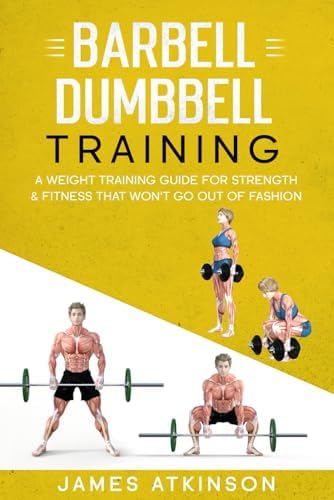 Visit on Amazon → Barbell & Dumbbell Training |
Book | Programming for a barbell and dumbbell setup | Paperback and digital | $12.99 |
The order in that table is the order I would buy in. Foundation first, space solution second, gap fillers third, plan last. If you only ever buy one row, buy the first one.
Should you buy the CAP 100 lb Rubber Coated Hex Dumbbell Set with Vertical Rack?
Yes, if you are building the foundation of a home gym and you have the floor space. Hex heads stay put, the rubber protects the floor and your ears, and the A-frame rack keeps the set off the ground where it belongs. Chrome handles give you a grip surface you can actually evaluate before you buy, and that matters more than the number on the box.
This is the set I would put in a client's garage first. It is not the last dumbbell you will ever own. It is the one that makes the room a gym.
Should you buy the Bodytech x Noubell adjustable dumbbell?
Yes, if space is the constraint and you want one-handed weight changes. The mechanism is the product here, so judge it by how it feels after a hundred changes with chalk on your hands, not by the weight range printed on the box. A smooth one-hand change is the feature that keeps you training when the room is small.
Should you buy the singles or the book?
Buy the singles when your set has a gap that keeps annoying you, usually the jump between light and medium. Buy the book when the equipment is in place and you need a plan that fits a barbell and a pair of dumbbells. Both are the cheap fixes that keep a home gym running, and neither one is a compromise on quality.