I have coached for twelve years, and most of that time I have been the guy in the garage gym at 5:40 in the morning, loading dumbbells while a client warms up on the bike. The operation is 4,000 square feet now, but I still keep a rack of iron by the door because that is where the real work happens. When people ask me to help them build a home gym dumbbells and rack setup, the conversation always runs the same way: they want the weights, and they forget the thing that holds the weights. That is backwards. The rack keeps the set usable, and the set is only as good as the collar that holds the plates.
Related: Adjustable Vs Fixed Dumbbells: What Belongs In A Garage Gym
The short answer: the rack is the piece most people should buy first, and the spinlock adjustable set is the piece most people should buy second. Everything else on this list is a specialist tool for a specific job. Neoprene pairs are for light, high-rep, hands-on work. Soft walking weights are for gait and shoulder health. Neither one replaces a loaded set, and no set replaces a stand that keeps 50 pounds off your toe at 6 AM.
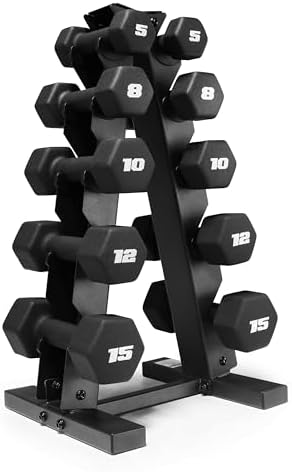
CAP Barbell Neoprene Dumbbell Weights Pairs & Sets
Quiet on the floor, easy on hands, good for light circuits and warm-ups
No knurling, no chalk, and the coating is not built for heavy loading
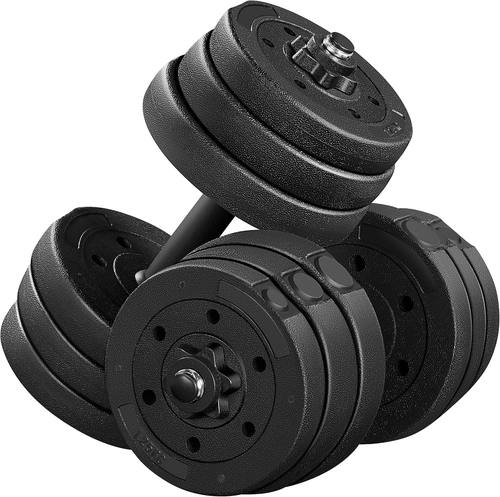
Yaheetech Adjustable Dumbbell Set with Spinlock Collars
Real loadable weight for the money, adjustable across a wide range
Spinlock collars need checking mid-set, plates can clang
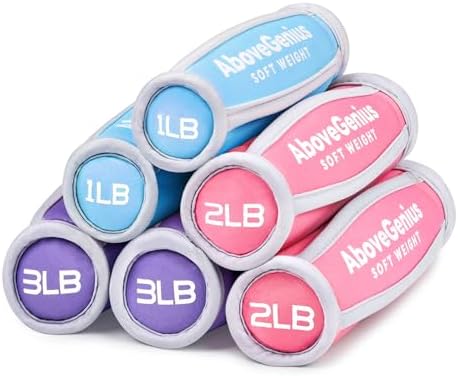
AboveGenius Soft Hand Weights Set
Comfortable for walking, rehab, and shoulder work, easy to grip for long durations
Not a strength tool, tops out light
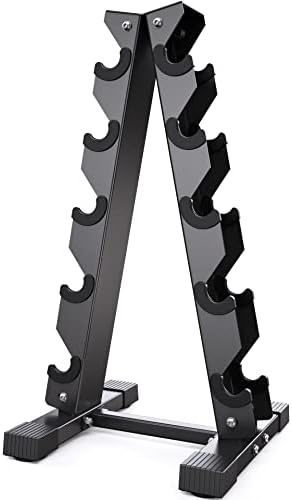
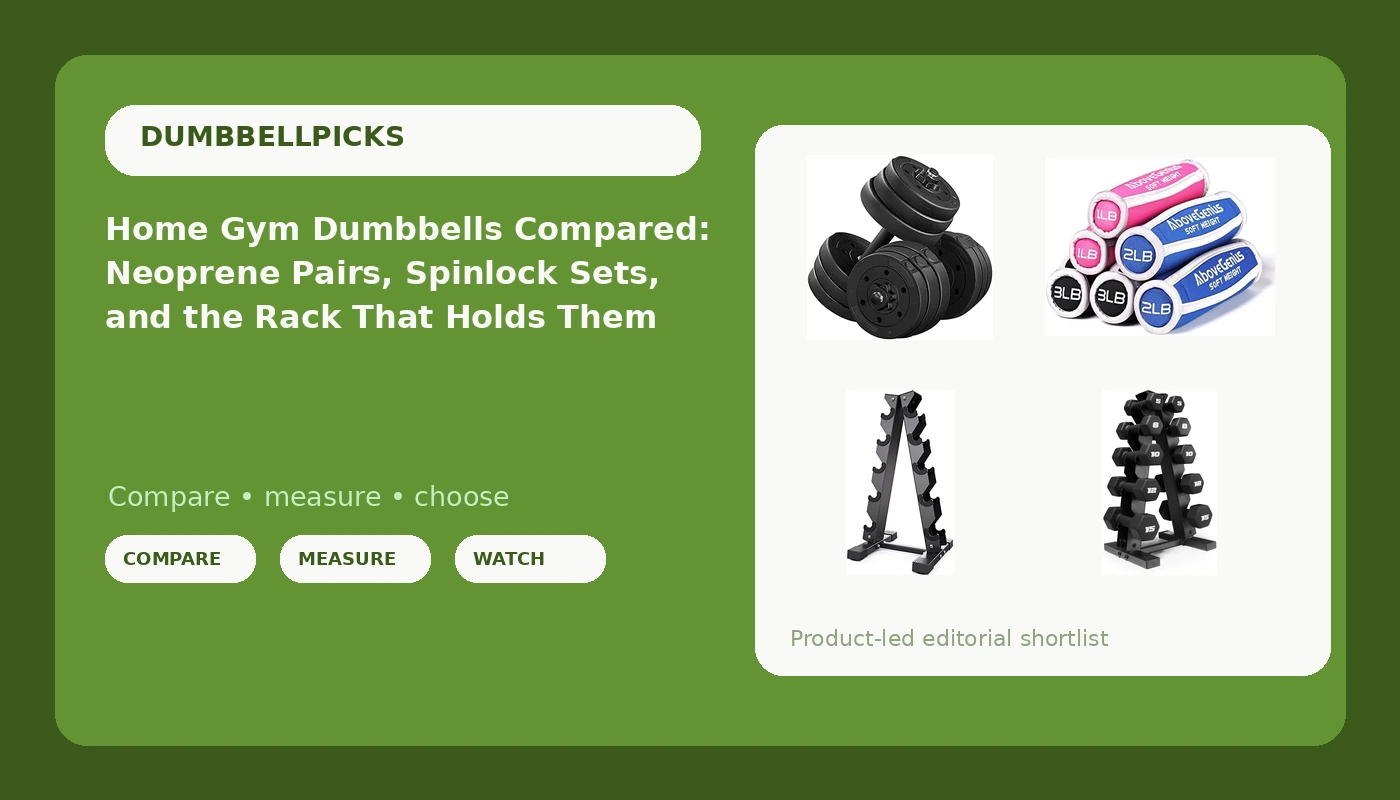
Dumbbell Rack Stand Only, Compact A-Frame
Keeps weights off the floor, compact footprint, high stated weight capacity
Stand only, no dumbbells included, needs a level spot
Prices and availability were captured from Amazon Creators API and may change.
How I judge a dumbbell before it earns floor space
Four things decide whether a dumbbell stays in my gym or goes to the storage closet.
First, the handle. Knurling is the soul of a dumbbell. Too smooth and you are fighting grip on every rep; too sharp and you are taping your palms by week two. A good handle holds chalk and skin without shredding either one.
Second, the plates. The weight should not wobble. If the plates shift on the handle, the welds are lying to you, and a wobbling plate turns a clean press into a shoulder impingement waiting to happen.
Third, the drop test. Clients drop weights. A 50 at 6 AM either survives the concrete or it does not, and the ones that survive are the ones I recommend.
Fourth, storage. A dumbbell on the floor is a dumbbell you will trip over, and a rack that tips is worse than no rack at all. You do not need 5 to 50 in one set. You need a set that does not rattle and a rack that does not tip.
CAP Barbell Neoprene Dumbbell Weights Pairs & Sets
Neoprene dumbbells get dismissed by people who only lift heavy, and that dismissal is a mistake. The CAP Barbell neoprene pairs and sets are the tool I hand to a 70-year-old client starting a first strength block, and they are the tool I grab myself for high-rep lateral raises when my shoulders are beat up from a week of pressing.
The coating is the whole point. It is quiet on a hardwood floor, it does not chew up your hands during a 20-rep set, and it does not scratch a coffee table if your gym shares space with your living room. For light circuits, warm-ups, and rehab work, that matters more than a knurl.
Here is the honest trade-off: neoprene is not a grip surface. It does not take chalk, and once your hands get sweaty in a hot garage, a neoprene handle gets slick in a way a knurled steel handle never does. It is also not a heavy-loading tool. If you are trying to build a 5x5 squat-adjacent program, this is not the set. If you are building a joint-friendly, high-rep, low-noise corner of your gym, it is exactly the set.
Yaheetech Adjustable Dumbbell Set with Spinlock Collars
This is the budget entry into real loading, and I want to be straight with you about what that means.
Spinlock collars are the classic threaded-collar design. You thread the collar down the handle until it locks the plates against the shoulder, and you get a dumbbell that holds a genuinely useful range of weight for a fraction of what a fixed set costs. For a beginner building a first garage setup, that adjustability is the difference between owning two weights and owning a decade of progressive overload.
The failure mode is the collar itself. Spinlock collars loosen. They loosen when you set the dumbbell down hard between sets, they loosen when the threads pick up dust, and they loosen faster if you are the type to drop the weight instead of placing it. The plate clang is real too, because loose plates on a threaded handle move. Check the collars between sets. Every set. That is not a suggestion, it is the price of the design.
If you want a set that survives a paying client's hands without a mid-set collar check, you are shopping in a different category and a different price bracket. If you want loadable iron today on a starter budget, this is the one on this list that actually gets heavy.
AboveGenius Soft Hand Weights Set
The AboveGenius soft hand weights are not a strength tool, and judging them as one is unfair to everybody. They are a walking and rehabilitation tool, and in that lane they are genuinely good.
The design is a soft, padded handle around light weight, available in the 1, 2, 3, and 4 pound range with 12 and 18 pound set options. You can hold these for 30 minutes of walking without your grip failing, which is the entire point. A knurled steel handle at 3 pounds would be absurd. A soft handle at 3 pounds is a tool you can carry around the block every day for a year.
Where they earn a place in a serious home gym is in the warm-up and prehab corner. Shoulder circles, arm carries, gait work with a client recovering from a hip replacement, that kind of thing. They are also the lightest thing on this list and the easiest to hand to someone who has never trained, which has real value when you are coaching a family rather than an athlete.
Where they lose: they top out light, they cannot be loaded, and they will not build meaningful strength. Buy them for a purpose, not as a substitute for a real set.
Dumbbell Rack Stand Only, Compact A-Frame
This is the piece I would buy first, and I will argue about it with anyone.
The A-frame design is the smart shape for a home gym because it stores weights at an angle, which means you are pulling them up and out instead of bending down into a floor pile. The stated capacity is 480 to 800 pounds depending on configuration, which is far more than most home setups will ever hold. It is a stand only, so it ships without dumbbells, and it needs a level spot on the floor.
The reason a rack matters more than most people think is safety and habit. Weights on the floor get stepped over, kicked, and eventually tripped on. Weights on a rack get picked up and put back, and a gym where the weights go back is a gym you actually train in at 6 AM when you are half awake.
The caveat is the same caveat I apply to every stand: load it evenly, check the feet, and do not stack it past its stated capacity. A rack that tips is worse than no rack, and an A-frame loaded top-heavy on one side is a tipping machine. Load the pairs symmetrically and it does its job quietly for years.
The trade-offs nobody puts on the box
Every product here is a compromise, and the compromises are different.
Neoprene buys you quiet and hand comfort and sells you grip and load ceiling. Spinlock buys you adjustability and load range and sells you collar maintenance and noise. Soft walking weights buy you carry comfort and sell you any possibility of progression. The rack buys you organization and safety and sells you floor space and assembly time.
The mistake I see most often is buying the weights and skipping the stand. People spend their whole budget on iron, stack it in a corner, and then stop training because getting set up for a set takes four minutes of digging. The stand is not a glamorous purchase. It is the purchase that keeps the other three in use.
Which one for which lifter
If you are building a first garage gym and your budget covers one or two items: buy the rack and the Yaheetech adjustable set. That combination gives you loadable weight and a place to keep it, which is 80 percent of what a home gym needs to function.
If you are training around joint pain, coming back from injury, or coaching a beginner or an older client: the CAP Barbell neoprene pairs are the right light-weight tool, and the AboveGenius soft weights are the right walking tool. Neither is a replacement for load, and both do jobs that loaded iron does poorly.
If you already own a fixed set and just need somewhere to put it: the A-frame rack is the whole answer, and it costs less than one pair of decent rubber hex dumbbells.
If you want one set that does everything and you are willing to pay for a mechanism rather than a collar: none of these four are that set. That is a different conversation, and it is the one I have with clients who are ready to spend real money on a dial or a quick-change system.
What I am testing next
I have a 2026 adjustable mechanism on the bench right now, part of a longer run where I cycle a set through a full twelve-week program and log every failure point. The new mechanisms are clever. Some of them are also fragile, and a collar that jams at rep 400 is a collar that jams in the middle of a working set.
The pattern I keep coming back to holds: the handle and the collar tell you more about a dumbbell than the weight range printed on the box. Run your hand down the handle. Check the plates for wobble. Set it down hard once and see what loosens. That test costs you nothing and it tells you everything.