Related: Hex vs Adjustable Dumbbells: Which Set Belongs in Your Garage Gym
I have coached long enough to watch the same mistake happen twice a year. Someone decides to build a home gym, buys home gym dumbbells first, and then spends the next six months working around that purchase instead of with it. The weights are the easy part. The order you buy them in, and the place they live, is what decides whether you actually train.
The setup I keep coming back to has four parts. A fixed hex set for the weights you touch every session. An adjustable set for the weights you only reach for sometimes. A rack that keeps all of it off the floor and out of your shins. And a form reference on the wall so you are not guessing at what a rep is supposed to look like. That is the whole list. You can add to it later.
Here is how I think about each piece, and the checks I run before anything earns floor space in a client's garage.
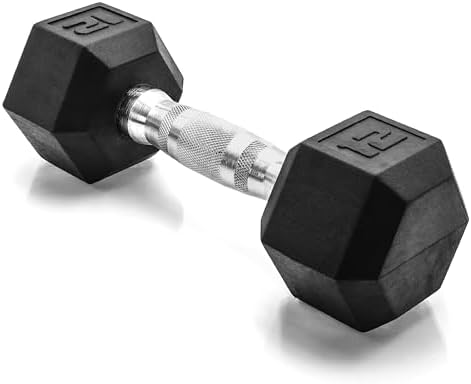
The Foundation: CAP Rubber Coated Dumbbell Weights
If you only ever buy one kind of dumbbell, buy fixed hex. Round heads roll away from you on a garage floor, and a dumbbell that rolls is a dumbbell you trip over at 6 AM with a coffee in one hand. Hex heads sit where you put them. That is the entire argument, and it is a good one.
These are sold as singles, which matters more than people expect. Pairs are convenient, but singles let you fill the gaps in a set instead of buying a whole new run of weights. Most home lifters end up with three or four pairs they genuinely use and a small graveyard of weights that never leave the rack. Buying singles forces you to be honest about which numbers you actually train with.
The rubber coating does two jobs: it protects a concrete floor and it keeps the noise down when you set the weight down between sets. The handle is the part I care about. Run your hand down it. You want a knurl you can feel without it tearing up your palm on high-rep work. Cosmetic knurling, the kind that looks aggressive in a product photo and feels like a smooth bar in your hand, is the most common cheat in this category. Chrome and comfort grip handles are a fine pairing on a fixed dumbbell, but no handle finish rescues bad knurling.
The Space Saver: Yaheetech Adjustable Dumbbell Set
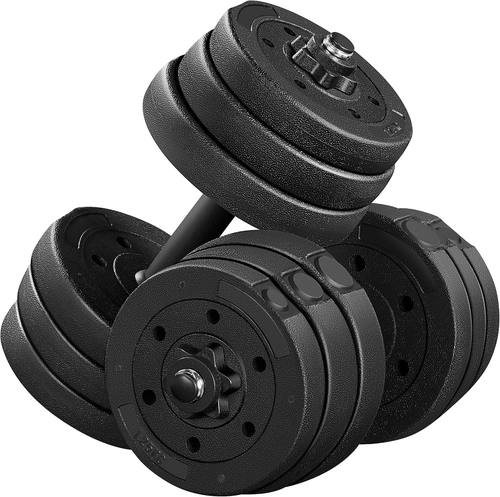
Adjustable dumbbells solve a floor space problem, and they solve it well. Spinlock collars are the old-school mechanism: a threaded sleeve and a collar you spin down by hand. There is no dial, no cradle, no plastic latch to crack, and nothing that needs a battery or a warranty phone call.
The tradeoff is honesty about the mechanism. Spinlock collars have to be tight, and tight means you check them before the set, not during it. That is the whole discipline with this style of dumbbell. Load the plates, spin the collar down until it stops moving, then start the set. Do it every single time, including on the light sets, because the light sets are where habits are built. The plates on any spinlock set are only as secure as your last turn of the collar. If you load it once and treat it like a fixed dumbbell, it will eventually tell you otherwise, usually at the worst moment of a set.
Where this style wins is range. One set covers a lot of weight in a footprint that tucks into a closet or under a bench, which makes it the right answer for an apartment, a spare bedroom, or anyone whose garage doubles as a parking space. The mechanism is the entire product. Judge it on how the threads engage, whether the collar holds, and whether the plates sit flat when they are loaded. A weight range is a spec sheet number. A collar that stays put is the thing you actually live with.
The Piece Everyone Skips: PLKOW Dumbbell Rack
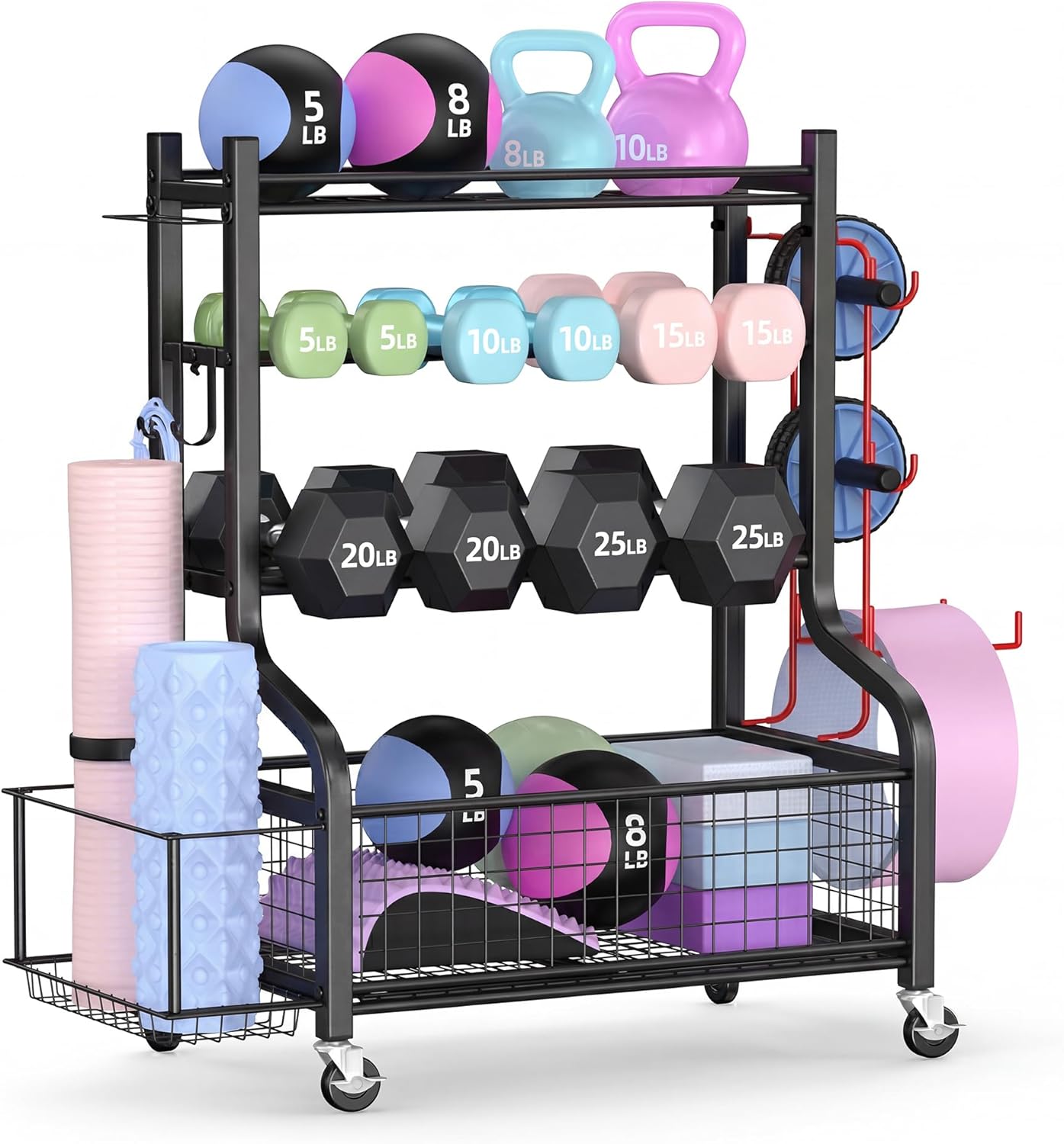
Nobody budgets for storage, and storage is what keeps a home gym from becoming a pile. A rack with wheels does two things at once. It keeps the weights at waist height so you are not deadlifting a pair off the floor before every set, and it lets you move the whole collection out of the way when the car needs to come in.
Hooks matter as much as the shelves. Look at where the weight actually rests. A rack that holds dumbbells by the handle is a different animal from one that supports the heads, and the difference shows up in how the rack behaves when it is half empty and someone bumps it. Hooks also give you a place for the small stuff that otherwise migrates across the floor: collars, a jump rope, a towel.
Wheels are only useful if they are paired with a load that makes sense. An evenly loaded rack rolls. An evenly loaded rack on a smooth floor rolls easily. An unevenly loaded rack goes where it wants. Load the heavy end low and keep the top row light, and a rack like this earns its spot as the one piece of home gym furniture you will never regret.
The Cheapest Upgrade: Palace Learning Dumbbell Workout Posters
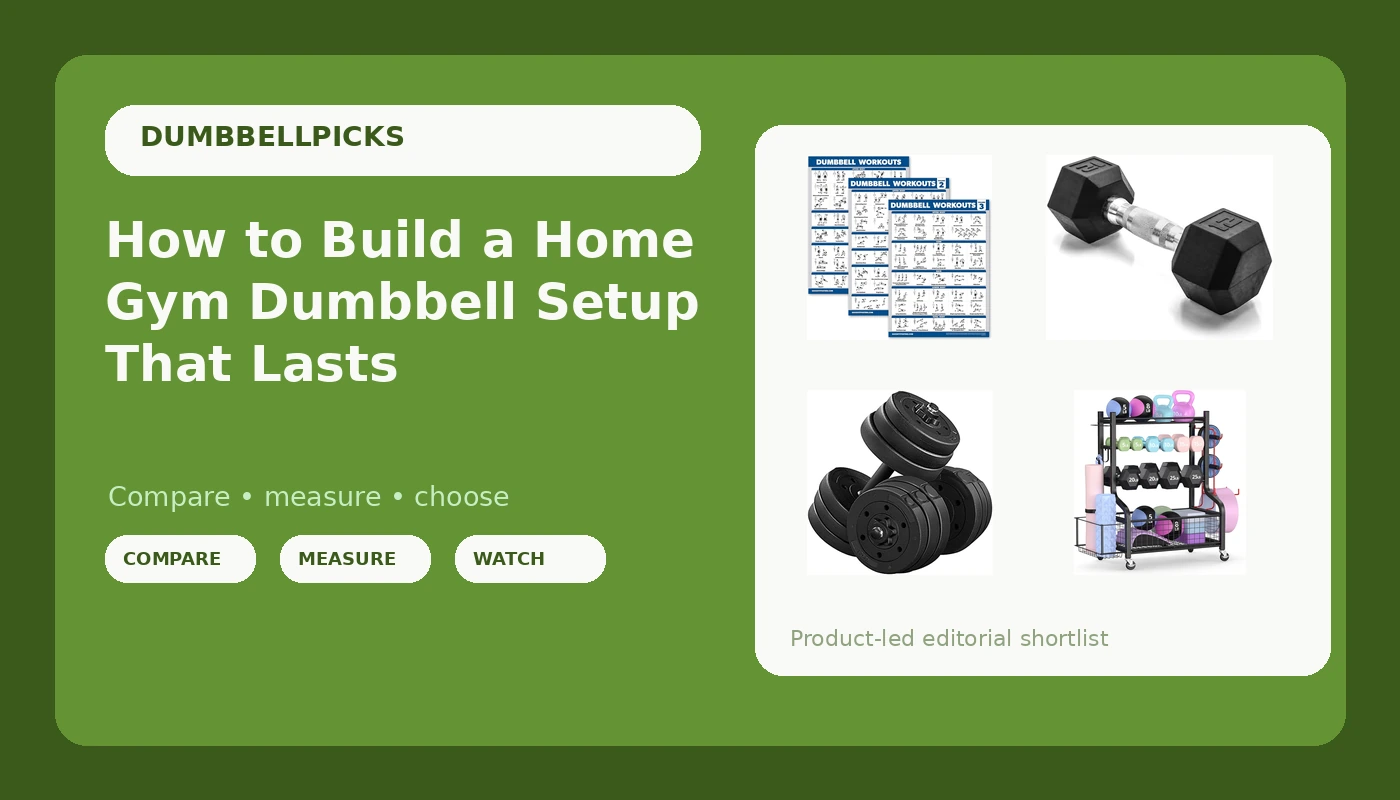
Three laminated charts at 18 by 24 inches, split across volumes one through three. The value is not the exercises you already know. It is the ones you have quietly been avoiding because you were not sure about the setup, the grip, or which direction the elbow travels.
I have watched people stall for months on a program not because they lacked effort but because they lacked a reference. A poster on the wall is a cue. It removes the ten seconds of hesitation before a set where you second-guess the movement and end up doing the version you already know instead. That hesitation is where programs die.
Lamination matters more than it sounds. A garage gym gets humid, and a paper chart in a garage gym becomes a curled, wavy mess by the second summer. Hang it where you can see it from the bench, not where it looks nice from the doorway. If you can read it mid-set, it is doing its job.
How I judge dumbbell gear
Every dumbbell that comes through my hands gets the same four questions, and none of them are about the brand.
First, does the knurling hold chalk and skin? A handle that goes slick the moment your hands get damp is a handle that turns a heavy set into a grip test. A handle that shreds your palm on rep fifteen is worse, because you will skip the next session. The good knurl is the one you notice for the first two weeks and then stop noticing.
Second, does the mechanism survive repetition? On an adjustable set, the mechanism is the product. A dial, a collar, a latch, a cradle: whatever changes the weight is the part that fails, and it fails on the five-hundredth change, not the fifth. Ask how it will feel after a year of daily use, not how it feels in the store.
Third, do the plates stay tight mid-set? Wobble is information. If a plate shifts when you press it overhead, the load is moving in a way you did not ask for, and your shoulder is doing the correcting. Fixed hex dumbbells earn their reputation here because there is nothing to come loose.
Fourth, would I put it in a paying client's hands? That is the test that settles most arguments. If I would not hand it to a 70-year-old grandmother doing her first goblet squat, it does not matter how clever the design is.
What the checks actually change
They change the order you spend money in. Most people buy weight range first, storage last, and a form reference never. The result is a garage with 400 pounds of iron on the floor, a program that stalls in month three, and a pair of adjustable handles with collars that never get checked because they are buried under a bench.
Flip it. Buy the range you will actually use, in the format that fits your space. Buy the storage that keeps it accessible. Spend the smallest amount of the budget on the reference material that keeps the movements honest, because it is the cheapest item on the list and the one that changes how the other three get used.
The home gym dumbbell reference table
| Gear | Role in the setup | What to check | Notes |
|---|---|---|---|
 Visit on Amazon → CAP Rubber Coated Dumbbell Weights |
The fixed set you train with every session | Knurl depth and plate tightness | Sold as singles, so buy the pairs you will actually use |
 Visit on Amazon → Yaheetech Adjustable Dumbbell Set |
Wide weight range in a small footprint | How the spinlock collars engage and hold | Collar tightness is a before-every-set habit, not a one-time setup |
 Visit on Amazon → PLKOW Dumbbell Rack |
Keeps weights at waist height and off the floor | How the hooks carry the load and whether the wheels track straight | Load heavy weights low, keep the top row light |
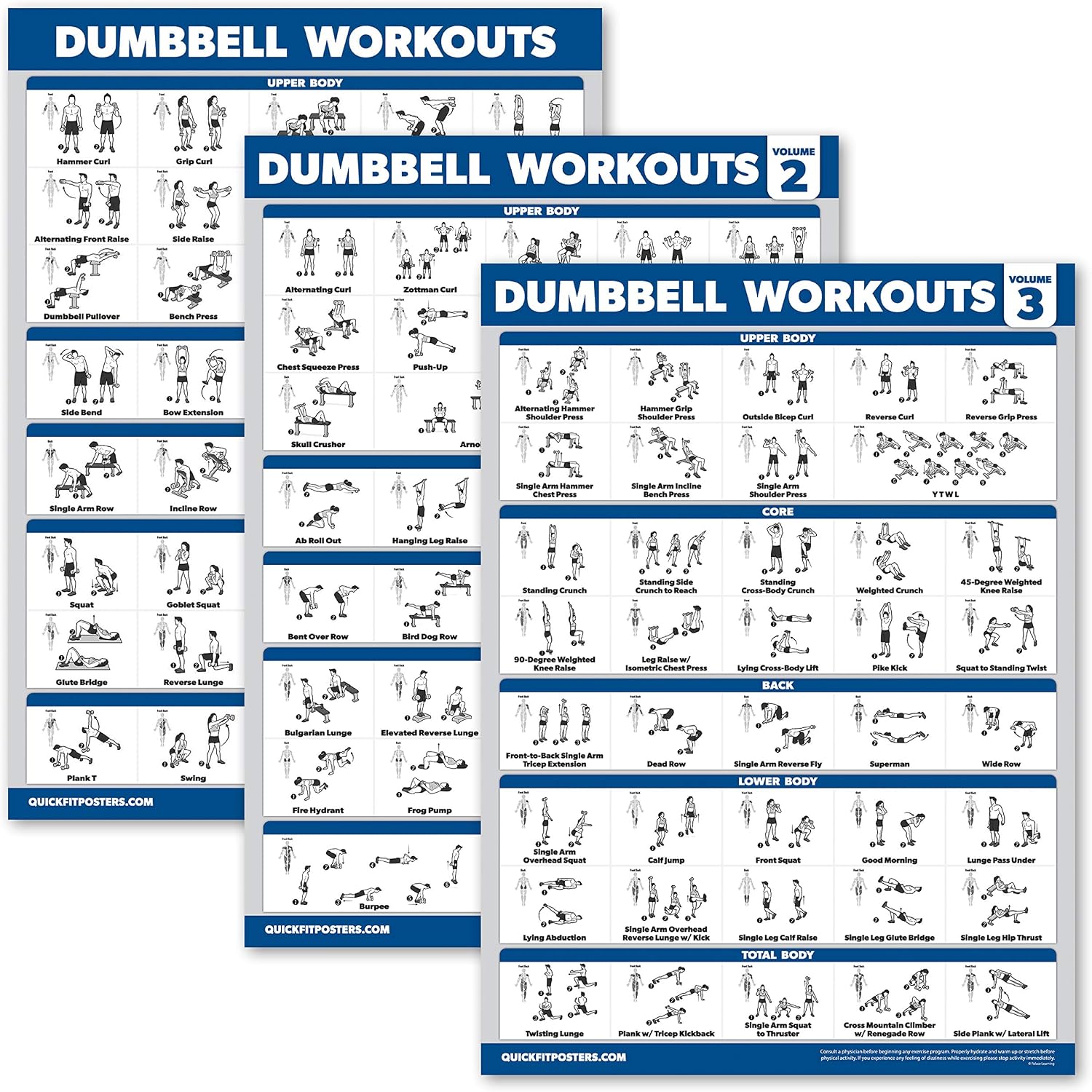 Visit on Amazon → Palace Learning Dumbbell Workout Posters |
Form reference on the wall | Lamination and whether you can read it from the bench | Three volumes, 18 by 24 inches each |
Should you buy the CAP Rubber Coated Dumbbell Weights?
Yes, if you are building a fixed set. Hex heads do not roll, the rubber protects the floor, and buying singles lets you build the set you need rather than the set a bundle seller decided to assemble. The handle is the deciding factor. Feel it before you commit to a run of weights, because you will be grabbing it thousands of times.
Should you buy the Yaheetech Adjustable Dumbbell Set?
Yes, if space is your limiting factor and you are willing to check the collars before every set. That is the deal with spinlock dumbbells, and it is a fair deal: a lot of weight range for a corner of a closet. If you want to load a dumbbell once and forget it, buy fixed hex instead. If you want range without a rack full of iron, this is the format that gets you there.
The order I would buy them in
Fixed hex weights first, because they are the ones you will use most. The rack second, because storage is what keeps the first purchase usable. The adjustable set third, for the weight ranges you only visit occasionally. The posters last, and cheapest, because they fix the thing that actually stalls programs: not the equipment, but the hesitation in front of it.